Přihlaste se do našeho newsletteru!
The life story of Marianne Golz-Goldlust is a remarkable testimony to personal courage, civic responsibility and the tragic paradoxes of the Nazi occupation. Born in Austria with Czech and Polish family roots, she made a name for herself in the 1920s and 1930s as a successful operetta singer, performing on major European stages. It was only the rise of Nazism and the transformation of the political situation in Central Europe that gradually led her to activities that fundamentally changed her future.
Marianne Golz-Goldlust was born Maria Agnes on 31 January 1895 in Vienna (incorrectly often given as 23 January), specifically in Hernals, the 17th district of Vienna. Her father was Ferdinand Belokostolsky (often incorrectly referred to as Josef in literature). According to current findings, he came from Poland, although some sources cite Trnava in Slovakia as his place of birth. He worked as a cable supervisor for the Vienna electricity company Wiener Elektrizitätsgesellschaft. Her mother was Amálie, née Bahrová, a native of Hrádek in the Znojmo region of South Moravia. Marianne later described herself as follows: “I am Viennese, my father is Polish, my mother is Czech.” 1 She grew up in Vienna in a Catholic family with her sister Rosa, whose real name was Rosina Amalia, later married Haala. Some sources also mention a brother named Josef.
After graduating from high school in Vienna, she studied dance and singing and took the stage name “Marianne Tolska”. Her first documented engagement was in the 1919/1920 season, when she performed at the Municipal Theatre in Steyr. The first mention of her artistic career dates from July 1921, when she made a guest appearance in Linz as a member of the ensemble of the Raimund Theatre in Vienna. This was followed by further guest appearances, including in Innsbruck. On 29 October 1921, she married Karl Schulz in Vienna.
In 1922, she performed in the operetta “Wiener Blut” in Stuttgart. From 1922 to 1924, she was engaged at the Landestheater in Salzburg, where she worked under the direction of the renowned Austrian operetta composer and conductor Nico Dostal. In 1923, she played the title role in the operetta “Madame Pompadour” by Leo Fall, a native of Olomouc. The peak of her operetta career came in 1923 when she performed alongside the then extremely famous Austrian tenor Richard Tauber in Johann Strauss Jr.’s operetta “Die Fledermaus”.
That same year, she moved to Berlin with Ernst Wengraf. Her husband founded the music publishing company Monopol Liederverlag there and later co-owned the company Phönix Wengraf & Co. Marianne probably withdrew from active stage work at this time, although she continued to maintain regular contact with representatives of the theatre and advertising world in her Berlin apartment. However, her marriage to Wengraf broke down after a short time.
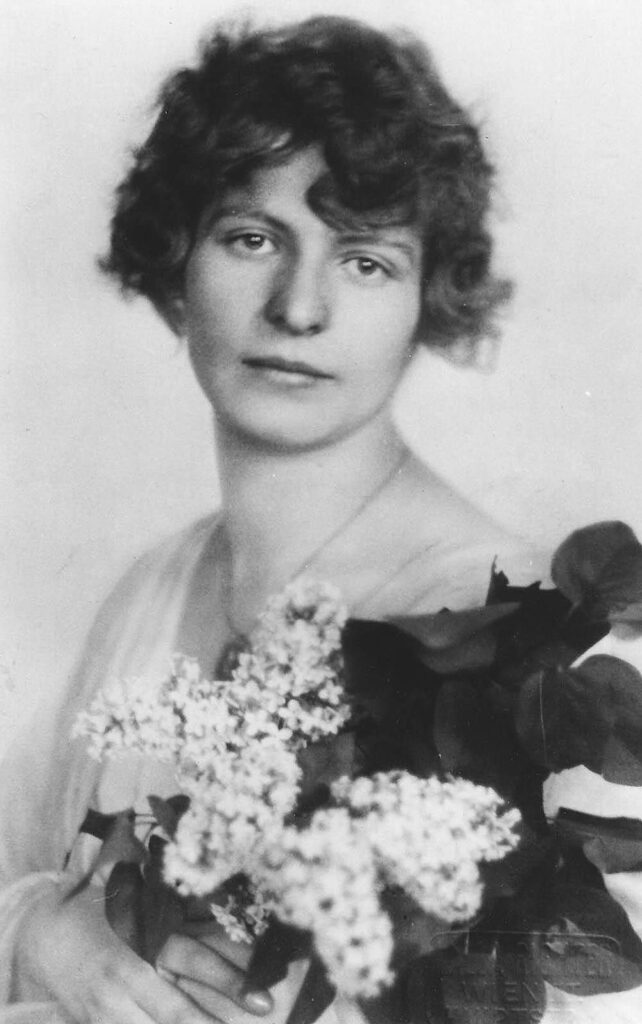
In Berlin, Marianne met Hans Werner Goldlust (1902‒1969), a local native seven years her junior. In the early 1920s, he adopted the name “Golz” because, as an assimilated Jew, he rejected the stigma associated with his original surname. He worked as the head of the advertising and sales department of the magazine “Die literarische Welt” (The Literary World), later becoming its co-owner and managing director. It was an important literary magazine to which authors later hated by the Nazi regime, including Bertolt Brecht and Walter Benjamin, also contributed.
After her divorce from Ernst Wengraf, Marianne and Hans Golz-Goldlust married in Berlin in 1929. From then on, Marianne lived in close contact with her husband’s family. Hans’s parents, Josef Goldlust (1873‒1939) and his wife Rosa (1876‒1942), later moved into the same house, and his sister Ilse, married to Neumann, also had an apartment there with her family. It was this close connection with her husband’s family, who were of Jewish origin, that became of fundamental importance in the following years and can be considered one of the key factors in her later actions.
After Adolf Hitler came to power in Germany in 1933, Hans and Marianne perceived the growing danger that the Nazi regime posed to them. In March of that year, Hans sold the magazine “Die literarische Welt” (The Literary World) and the couple decided to emigrate to Prague. After some time, Hans’s parents Josef and Rosa Goldlust, as well as his sister Ilse and her husband Ernst Neumann, followed them to Czechoslovakia. For most of their time in Prague, the family lived at Strossmayerova 4, now Farského 425/4. While Hans earned his living in Prague working for various foreign newspapers, including the Paris-based Mitropress agency, Marianne worked as a theatre critic, who was reportedly known in all Prague editorial offices.
Marianne’s niece Erika Haala later recalled her as follows: “She was a very beautiful woman who aroused great admiration. She liked to wear colours and was always well dressed. She was a very striking and dominant type of woman, very energetic and lively. A person who radiated a great deal of life energy. I thought about it for a long time, and I think ‘zest for life’ is the wrong expression. Wherever she was, she was the main character on the scene. I don’t know if it came from her stage presence or her temperament, but it had a huge influence on all of us. She was a person with tremendous charm, warmth and cheerfulness.” 2
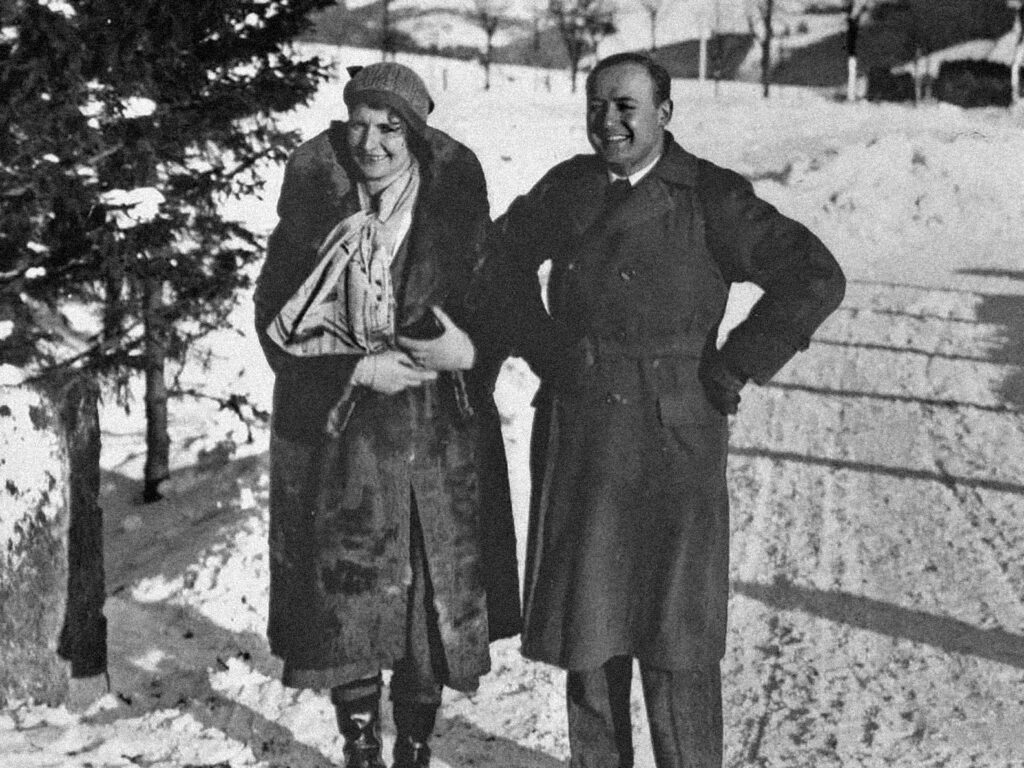
Marianne apparently decided to stay in Prague to help her husband’s family and to settle matters related to the flat where the couple had been living. Although she had the necessary documents to join her husband in England in July 1939, she was unable to emigrate before the outbreak of war in September 1939. Meanwhile, her father-in-law Josef Goldlust committed suicide in Prague in August 1939.
After the war, Hans Golz recalled this situation: “My wife Marianne initially wanted to follow me to England. But when the war broke out, it was no longer possible. We also only had the option of sending messages of ten words through the Red Cross. My wife was never afraid. She immediately began arranging the escape of Czechs and Jews…” 3
From the autumn of 1941, systematic deportations of Jews to ghettos and concentration camps began in the Protectorate of Bohemia and Moravia, with the aim of isolating, exploiting and ultimately exterminating them. The main assembly point and transit station was the concentration camp in Terezín, officially established as a ghetto in November 1941.
The events in Marianne Golz-Goldlust’s immediate family circle also tragically affected this development. Her sister-in-law Ilse (1901‒1942?) was deported from Prague to the ghetto in Łódź (Litzmannstadt) together with her husband Ernst Neumann (1893‒1942?) deported from Prague to the ghetto in Łódź (Litzmannstadt) on 3 November 1941 and from there to Chelmno (Kulmhof) on 19 May 1942, where they were murdered. On 20 June 1942, Marianne’s mother-in-law, Rosa Goldlustová, was also deported to Terezín, where her fate was sealed in the Treblinka extermination camp.
Probably influenced by these personal events, Marianne did not hesitate to help whenever she was asked and whenever it was within her power to do so. When asked whether she was involved for political reasons, Erika Haala, daughter of Marianne’s sister Rosi, replied: “Yes and no. She was a person who was very aware of the political aspects of the time. But she certainly did not do it as a form of resistance, but out of humanity, that’s for sure. But not out of a naive humanity that was unaware of the political world. That was definitely not the case with her.” 4
Marianne Golz-Goldlust was one of those who had the courage to do what she considered a natural human duty among her friends – to help people threatened with persecution and death. She maintained contact with people who were smuggling endangered friends and acquaintances from the Protectorate to safety. Through secret connections and false documents, this network enabled Jewish women and men, often just before their deportation to extermination camps, to flee abroad. At the same time, Marianne helped to transfer some of the financial assets of those fleeing the country to her sister Rosi in Vienna.
The specific scope and exact mechanisms of the assistance that Marianne Golz-Goldlust provided to endangered Jews can only be reconstructed indirectly today – primarily from the preserved judgment, brief mentions in her letters, and several later testimonies. The sources are fragmentary, but they nevertheless indicate the relatively broad scope of her activities.
Marianne’s niece Erika Haala later recalled: “Marianne helped them by using her connections or contacts with the Gestapo or some official to find out in time about the deportation of those who were at risk. The people who were on the next list were notified and, with the help of some kind of organisation, were taken across the border at night, and then the money was sent to my mother.” 5This testimony suggests the existence of an informant network and an organised smuggling operation in which Marianne was involved.
Other testimonies suggest that her help may have extended to the Terezín ghetto. Erna Steiner, then still under her maiden name Langer, who worked with Marianne and whose mother sewed for her, stated: “I knew Mrs Golz only indirectly; we had a coded list of names. I didn’t know her name was Golz. Then one day she became my mother’s customer. I recognised her. And I told her: not a word to my mother. She was a wonderful woman and of course she kept quiet. And then she made a terrible mistake. She got some people from Terezín to Switzerland, etc. She got some people out of the concentration camp through her contacts in the SS.” 6
According to other references, Marianne allegedly passed on information from occupied Prague to the Czechoslovak government-in-exile in London via a secret connection to her husband. Erna Steiner said: “I knew about it because letters were sent, encrypted, and there was also a connection to President Beneš.” 7However, these statements must be evaluated with the knowledge of their limited source verifiability.
A major turning point came on Thursday, 19 November 1942, when Marianne Golz-Goldlust and several friends were arrested by the Gestapo in their Prague apartment. The raid took place during their regular meeting.
Along with Marianne, Erna Steiner was also detained in the flat with her mother. She later recalled: “We arrived there at half past eight, and there were a lot of people there, and the Gestapo opened the door with the words: ‘We’ve been waiting for you!’ Marianne probably told them who was coming, because it was a normal invitation, and different people come. There were definitely eight of us. I didn’t have time to get to know these people at all. It was already over when we walked through the door. We didn’t stay in the flat for long, and they took us away.” 8
Marianne’s sister Rosi was also arrested in Vienna on the same day. Her daughter Erika Haala recalled this event: “First, my mother was detained by the Gestapo in Vienna without any reason being given. The next morning, my mother was released. She knew that it was about helping Jews escape from Prague and about the money she had given to these people, because they asked her about it. Then we heard about a lawyer; someone came to us and told us that Marianne had been arrested in Prague on the same day and that she was and would remain in prison because she would be tried, as the charges against her had been proven – nothing could be proven against my mother.” 9 The fact that her husband was an officer in the Wehrmacht probably contributed to her early release.
During Gestapo interrogations, Marianne consistently exonerated the person arrested with her, as had been agreed in advance among their circle, according to later testimony. This strategy proved effective in practice. Erna Steiner and her mother were released after several weeks in the Gestapo’s Pankrác prison. As Erna Steiner stated: “Marianne took everything upon herself, and we were innocent lambs who had been arrested at a social evening. Various interrogations took place, and after Marianne said that the others had nothing to do with her, that they were her guests, it was over. We were released.” 10
Erna Steiner’s memories also eloquently illustrate Marianne Golz-Goldlust’s personal courage: “Marianne was a personality, and look, when someone tells you that whatever happens, they will take all the blame, they must be incredibly strong to be able to do that. There were a lot of us, and we were all arrested, and there was a great danger that one person would say something different from another.” At the same time, she recalled the atmosphere of general mistrust in the Protectorate: “She once said to my mother, ‘If you bring me the things I ordered or visit me, if something happens, you only know me in a business context and nothing else. And so, with this cover, we went to deliver the blouse we had ordered. In the Protectorate, how should I put it, everything was falling apart. You have to understand that the Germans, Jews and Czechs were all suspects. You never knew if, when you talked to someone about something, that person would report you. You couldn’t trust anyone. We lived as if on a volcano. Yes, even within the family, we couldn’t trust each other. It was terrible.” 11
The Gestapo raid in November 1942 did not only affect Marianne Golz-Goldlust, but also a wider circle of people who were directly or indirectly connected to her. Among those arrested was Otakar Zápotocký (also referred to in sources as Otokar Zápotecký) from Prague, who was later also sentenced to death. According to the indictment, shortly before the declaration of a state of emergency, he had hidden the Levit couple, who had been summoned for transport, in his flat and provided them with false identity cards, with which they were to flee to Leipzig under false names.
The maid Emilie Flunková, with whom the Levit family had been staying for some time, was also sentenced to death. According to the court’s findings, she was involved in obtaining the false documents by using stolen official forms and stamps. The Gestapo also got hold of Ladislav Dlesk, a confectioner from Vienna. The court accused him of smuggling two men across the border to Austria by train in November 1942.
The wider circle of people associated with Marianne Golz also included Emil Samek, a “Protectorate Jew” who was supposed to have helped Jewish merchant and co-defendant Josef Goldschmidt on his journey to Vienna. Josef Goldschmidt, who as a “racial Jew” had avoided deportation and was hiding in Vienna, was also sentenced to death.
These cases show that the Gestapo uncovered a relatively wide network of people involved in helping the persecuted, with repressive measures affecting not only the main organisers but also individuals providing partial forms of support.
The question of how the activities of Marianne Golz-Goldlust’s circle were revealed remains unclear to this day. Marianne herself later commented on the circumstances of her arrest only briefly and somewhat cryptically in one of her Pankrác prison notes: “I was artificially drawn into a certain affair because I knew too much, far too much (please remember this for later, it is important!).” 12
Marianne was also convinced that betrayal from her close circle played a decisive role. In a prison report addressed to Karel Rameš, she accused her Jewish friend Evženie Synková: “Evženie Synková, a Jew, is responsible for me and ten other people. She is a Gestapo agent. Mr Karel, please make sure that Mrs Synková’s double-dealing becomes known. She should not be celebrated one day when she does not deserve it at all!” 13According to Marianne’s belief, Synková had betrayed the whole group in the hope of saving herself and her family.
However, Marianna’s niece Erika Haala offered a different and apparently simpler explanation after the war. According to her recollection, the betrayal was unintentional: “Once, my mother gave one of the refugees a payment receipt on which there was a private message for him. This person was arrested in Vienna, and so the whole thing was revealed. This man did not have a ‘J’ in his passport, he was half-Jewish, and that was very fortunate for my mother, because she could say that she did not know he was Jewish, and so she was released. But of course they continued their investigation, and Marianne was the sender, so the whole thing was revealed.” 14 This version is also supported by court documents, but the lack of clear sources makes it impossible to determine with certainty which version corresponds to the actual course of events.
After her arrest, Marianne Golz-Goldlust was first imprisoned in the women’s prison in Prague-Řepy. She was then transferred to the Gestapo police prison in Prague-Pankrác. She was held in Section II A, which was mainly used for prisoners sentenced to death. In the final years of the occupation, the Pankrác prison was one of the main places of execution in the Protectorate. In the space of two years – from April 1943 to April 1945 – a total of 1,075 people were executed by guillotine, 155 of whom were women.
Despite the extremely difficult conditions, in early July 1943 Marianne made contact with Dr Richard Mácha, who had also been sentenced to death, by means of a secret note sent to the neighbouring cell. A romantic relationship gradually developed between the two, based exclusively on secret correspondence. Among others, Karel Rameš, a non-political prisoner with relatively greater freedom of movement, made this possible. He smuggled notes between cells and also delivered letters that prisoners wanted to send to their loved ones beyond the reach of German prison censorship.
The preserved letters of Marianne and Richard are an exceptionally moving testimony. They are love letters written by two people sentenced to death, written in the immediate vicinity of the execution site. The texts combine hope and resignation, courage and doubt. They were written with an obvious effort to preserve humanity and the ability to love even in a situation where both writers expected their imminent end. Part of this correspondence was published in 1946 by Karel Rameš under the pseudonym “Karel R.” in a two-volume book entitled “Žaluji” (I Accuse) with the subtitle “Pankrácká kalvarie” (Pankrác Calvary), published by Orbis. The publication contains letters and notes from prisoners sentenced to death in Pankrác Prison between 1940 and 1945, supplemented by photographs of some of those executed.
In his book, Rameš recalled Marianne Golz-Goldlust with these words: “If anyone could be described as a ‘noble spirit’ even in these modest and humiliating circumstances, it could only be her. Proud, she looked with a smile at those ‘truly pathetic’ watchmen, that dubious and disgusting cream of German power. Although, as an Austrian, she was fluent in German, she rarely stooped to arguing with the guards about anything; it must have been an exception when the other women in the cell asked her to do so. She was above even the question of food; even though she herself suffered from hunger and malnutrition, she controlled herself to such an extent that she treated food rations as something secondary.” 15
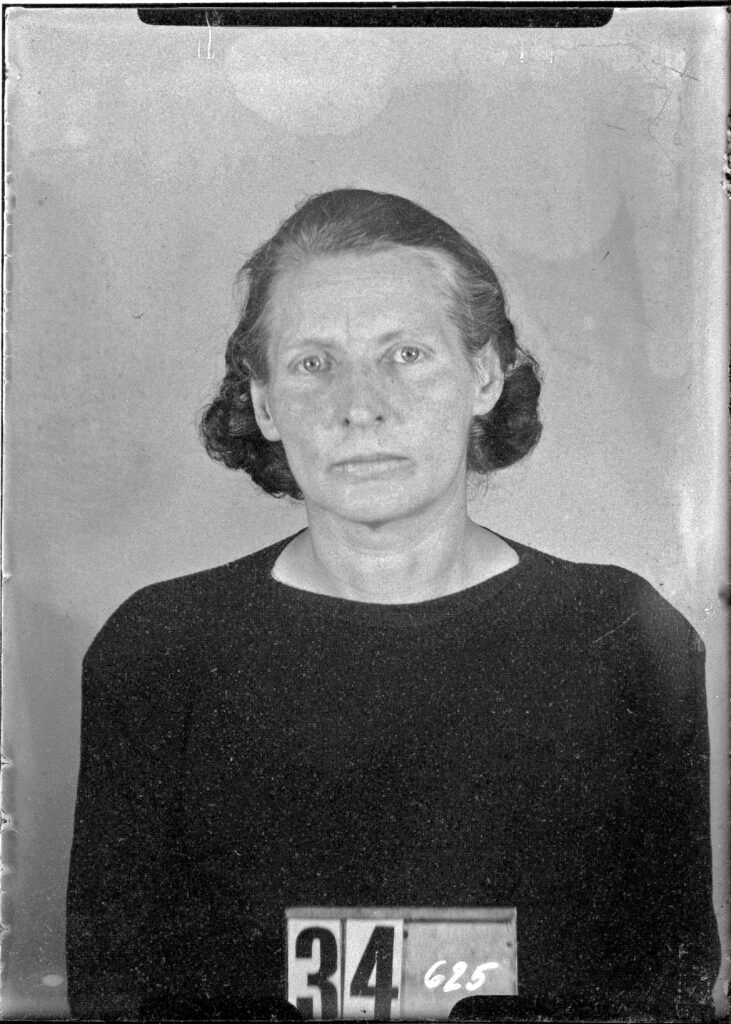
At the same time as the investigation, Marianne Golz-Goldlust’s family sought legal assistance. From at least January 1943, they sought to obtain a lawyer, and after considerable difficulty, Prague lawyer JUDr. O. Schramek (her full name and any other information have not yet been found) took on the defence and was later assigned to Marianne as her court-appointed defence counsel. In a letter to her sister Rosi in May 1943, Marianne wrote about her: “This woman acts completely selflessly. She has given me so much courage; she is a woman, after all. Women have hearts, and when they also have brains, they are more than men. I am glad that I have her and not some lawyer.” 16
The trial of Marianne Golz-Goldlust and seventeen other defendants took place on 18 May 1943 before the Special Court at the German Regional Court in Prague. The indictment was conducted in the ideological spirit of Nazi justice and sought to criminalise not only specific acts, but also the personal and social ties of the defendant. For example, the indictment stated: “The defendant Golz-Goldlust is now married for the third time. Her current husband is a full Jew. One of her previous husbands was also a full Jew. From the fact that the defendant Golz-Goldlust is completely Jewish in spirit due to her various marriages to Jews, maintains friendly relations with Jews, half-Jews and friends of Jews, it can be concluded that the defendant Golz-Goldlust would be willing, without any external or internal coercion, to continue to help her Jewish acquaintances in the future in their attempts to evade state measures by emigrating.” 17
The trial took place at a time when the Nazi judiciary in the Reich and the Protectorate was harshly punishing any form of assistance to the persecuted. The trial clearly also had an exemplary intimidating function. Of the eighteen defendants, Marianne and nine others were sentenced to death as “saboteurs for aiding enemies of the Reich”. 18
The family’s legal efforts to overturn the verdict were unsuccessful. Repeated requests for clemency were also unsuccessful. Marianne remained in Pankrác Prison, knowing that her execution was approaching. On 5 October 1943, three days before her execution, she wrote to her sister Rosi in a note: “Today, neither you nor I are writing anything else; I have lost the game of life. I am going and trying to go like a heroine. Don’t cry, dying has become a common occurrence. My life was beautiful, and until my last hour I was loved by all my friends, and I still received beautiful love letters from men, and I was so happy until the very end.” 19
On the same day, she addressed another note to the public prosecutor, who was to be present at her execution. This text is one of the most eloquent testimonies to her attitude in the face of death:
Mr. Public Prosecutor,
Marianne Golz, née Belokostolsky 20
I have no desire to see you! But I will say a few words to you today.
You did not say many good things about me in court. Only one thing: that I am eccentric and intelligent. I must agree with these words, and that is also binding. I will have courage, because no one has the right to take my life. Will you also have courage when fate presents you with your bill? But you are only a man.
I will tell you one thing. Think twice before murdering women for such things. Because you are a serial killer, and a killer of women at that.
I have made sure that my case will be known in detail later. And you informers will not be able to sleep peacefully either. Nevertheless, enjoy your meal, because one day fate will deal you a bad hand too. Then take me as an example.
On 8 October 1943, Marianne Golz-Goldlust was executed. Like many other convicts, she had lived in the previous months between hope and the expectation of an inevitable end. For many prisoners, their last psychological support was the belief that the Nazi regime would collapse before the sentence was carried out.
According to later testimonies, Marianne attempted to escape the guillotine by her own hand on the day of her execution. She was said to have taken a deadly poison in the holding cell. If this attempt did indeed take place, it was unsuccessful – available reports indicate that she was in a state of severe indisposition or semi-consciousness when she was taken to the place of execution and the sentence was carried out.
Shortly after the execution, Karel Rameš sent a brief message to Marianne’s sister Rosi in Vienna, urging her to be brave and stating, among other things: “Please, Madame, be brave. Marianne Golz was a strong, heroic woman.” 21
Further testimony about Marianne’s last hours comes from a note written by her fellow prisoner Otýlie Hynková, who was also awaiting execution. In it, she addressed Rosi directly and tried to fulfil a promise made to her deceased friend:
I promised Marianne that I would write to you after her death. I am keeping our agreement and fulfilling it before I myself go. My Marianne preceded me. Marianne had been ill for several months and had not eaten anything. In those last days, when she knew she was going, she wanted to cut her arteries, but she did not succeed. She wanted to hang herself, but that failed too. At the last moment, she obtained some pills and took them on her last night. She was very ill and in this pitiful state, almost unconscious, she was taken away in the morning. She did not escape the axe, just as none of us will escape it. She died quietly, without knowing where she was going. Mrs Růženka, this is how your dear sister died, loved by all and mourned by everyone. My Marianne, my dear Marianne, I love her so much, forgive me, I am very sad, I am sending you this letter because I promised I would. I am not writing to anyone else because I myself am already dead to this world. 22
After the Second World War, the commemoration of Marianne Golz-Goldlust progressed only very slowly. Although her family tried to achieve at least partial official recognition of her suffering, public commemoration was a long time coming. In 1958, her husband Hans Golz, who had since remarried, filed a claim for compensation with the so-called Compensation Office in Berlin. The office stated that Marianne’s case fell under the category of “damage to liberty” according to compensation legislation. Two years later, she was awarded “compensation for restriction of liberty” for the ten months and nineteen days she had spent in prison, in the amount of 1,500 marks – a sum that only symbolically reflected the gravity of her fate.
There was virtually no public reflection on her story in Czechoslovakia after 1945. For many decades, Rameš’s book “Žaluji” (I Accuse, 1946) remained the key testimony, but it was not systematically developed through further research or wider popularisation. There were probably several reasons for this omission. Marianne was a woman with no ties to the communist resistance; her activities were more of a civilian nature, and she was also a person with an ambiguous national identity – an Austrian German closely connected to the Jewish community. Such a profile did not correspond to the post-war and later communist canon of “heroic resistance”, which preferred primarily organised, ideologically distinct forms of resistance.
It was only after 1989 that her fate began to be gradually rehabilitated and more widely commemorated. More significant moral recognition had already come from abroad: on 9 June 1988, the Yad Vashem Memorial in Jerusalem posthumously awarded Marianne Golz-Goldlust the title of “Righteous Among the Nations”. Tree No. 806 was planted in her honour in the memorial’s olive grove. This award is one of the highest honours bestowed by Israel on non-Jewish individuals who demonstrably helped save Jews during the Shoah.
Legal rehabilitation did not occur until the turn of the millennium. On the initiative of her relatives, on 2 January 2000, the public prosecutor’s office at the Berlin Regional Court confirmed that the judgment of the Special Court in Prague of 18 May 1943 had been annulled in accordance with the law on the “annulment of Nazi judgments of injustice in criminal justice”. Marianne Golz-Goldlust was thus officially legally rehabilitated.
Marianne was married three times during her lifetime, but had no children of her own. Her third husband, Hans, remarried after the war and in 1947 had a son, Ronald (Ronnie) Golz. It was he who later played a significant role in commemorating Marianne’s story and collecting sources about her life. His efforts resulted, among other things, in a book published in several languages, which was also published in Czech in 2014 under the title “Byla jsem šťastná až do poslední hodiny” (I Was Happy Until the Last Hour). Ronnie Golz’s search for Marianne’s fate was also captured by Italian documentary filmmaker Monica Repetto in her film “La vera storia di Marianne Golz” (The True Story of Marianne Golz, 2008).
Marianne’s name is also commemorated today at several memorial sites. It is listed on the memorial at the Strašnice Crematorium in Prague, which commemorates the 1,893 victims of Nazism from 1941 to 1945, especially those executed in Prague at Pankrác, Ruzyně and Kobylisy, and prisoners from branches of the Flossenbürg concentration camp. A memorial plaque with Czech and German text was unveiled in January 2020 on the house at Farského Street 425/4 in Prague, where Marianne lived until her arrest; the initiative came from the community of owners of the house, and Ronnie Golz also attended the ceremony.
Other forms of commemoration included the exhibition “Righteous Among the Nations – Marianne Golz-Goldlust”, organised in 2014–2015 by the Austrian Cultural Forum in Prague in cooperation with the Berlin Memorial to the German Resistance and the Prague Security Services Archive. Most recently, her fate was fictionalised in Petra Klabouchová’s novel “Duch Pankráce” (The Spirit of Pankrác, 2025), which depicts the environment of Pankrác Prison, including the relationship between Marianne Golz-Goldlust and Richard Mácha (under different names).
The story of Marianne Golz-Goldlust thus concentrates several layers that make it an exceptionally eloquent testimony to the Nazi occupation. It shows the transformation of a successful artist into a personality who, in an extreme situation, decided to act according to her own conscience, outside the framework of organised resistance and without any certainty of protection. It is precisely this non-institutionalised, individually motivated help for the persecuted that is one of the essential, albeit long-neglected, forms of resistance. At the same time, her fate reminds us how selective post-war memory was. The fact that this figure remained almost outside the public eye for decades says more about the interpretative frameworks of the time than about the significance of her actions. Only later research and gradual commemoration made it possible to place her story back into the broader context of the history of Nazi persecution and civil solidarity.