Přihlaste se do našeho newsletteru!
Jiřina Kopoldová’s life story is closely intertwined with the history of the communist movement, exile, the Second World War, personal courage and post-war political developments. As the daughter of Jan and Marie Šverma, she grew up among leading Communist figures in interwar Czechoslovakia; after the Munich Agreement, she left with her parents for the Soviet Union and, during the Second World War, voluntarily joined a Czechoslovak military unit. She recorded her experiences in diary entries, which provide valuable insight into daily life at the front and the service of women in the army. Upon her return to Czechoslovakia, her life once again became closely intertwined with political history.
Jiřina Švábová-Švermová-Kopoldová 1 was born on 23 September 1923 in Prague’s Karlov district as the daughter of Jan Šverma (1901–1944) 2 and Marie Švábová (1902–1992) 3. 4 Her parents and close relatives called her Jurka, and until her parents’ marriage in 1931, as an illegitimate child she bore her mother’s surname. Her parents met in 1921 among working-class youth, and both belonged to the young generation of communist activists who were involved from the outset in the organisational and political development of the Communist Party of Czechoslovakia (KSČ).
Her mother, Marie Švábová, worked as a secretary for the Prague branch of the Communist Youth Union of Czechoslovakia, and later in the so-called women’s section of the Secretariat of the Central Committee of the KSČ, a department focused on work among women, particularly their political organisation, agitation and involvement in the communist movement. Her father, Jan Šverma, did not complete his law studies at Charles University and in 1924 joined the editorial staff of the newspaper Večerník Rudého práva (Czech for Evening paper of the Red Justice or The Red Right), where he gradually established himself as a prominent figure in communist journalism and party politics. His career in the Communist Party rose rapidly: between 1924 and 1926 he sat on the politburo of the highest body – the Central Committee of the Communist Party of Czechoslovakia (ÚV KSČ); in 1929 he was elected to the party’s innermost leadership; and in the second half of the 1930s he served as a member of the National Assembly and editor-in-chief of Rudé právo (Czech for Red Justice or The Red Right).
Her parents’ political involvement also influenced their private life: it was mainly her grandmothers who helped look after Jurka, and according to later accounts, it was precisely this environment that contributed to her early independence. Nevertheless, her relationship with her parents was described as harmonious and her upbringing as relatively tolerant. Her parents guided her towards a socialist worldview, but at the same time emphasised education, reading and the ability to think for oneself. 5
An important experience for the young Jiřina Švábová was her parents’ stay in Moscow, where, between 1926 and 1928, they attended the so-called Lenin School, designed to train communist officials from around the world who were loyal to the Soviet Union. Jurka did not join them until late summer 1927, but she was with them for only a few weeks, as there was no place in the nursery and when Jurka fell ill, there was no one to look after her. So they sent her back to Prague. Interestingly, whilst in Moscow, the family became close to the writer and communist politician Jožka Jabůrková (1896–1942) 6. She also looked after little Jiřina, and her experiences with the girl became the inspiration for her children’s book Evička v zemi divů (Evička in Wonderland), which was first published in 1932 in Prague under the author’s pseudonym Ida Ostravská (and again in 1950). 7 In it, Jabůrková captured, through a child’s perspective on the world, the young heroine’s first encounter with the Soviet Union, which she idealised in the book as a contrast to “bourgeois” Czechoslovakia. 8
When her parents returned to Czechoslovakia in 1928, they lived together for another two years in Prague’s Letná district. Jožka Jabůrková and her partner Alexandr Bubeníček (1899–1938) 9, a Communist official, also lived with them.10 The political careers of both parents gained further significant momentum after 1929, when the radical Gottwald wing took control of the Communist Party and the party aligned itself unreservedly with Moscow’s policies. Jan Šverma became a member of the Central Committee of the Communist Party of Czechoslovakia (KSČ), the Politburo and the Secretariat, and was appointed head of the trade union department of the KSČ Central Committee, whilst Marie Švábová continued to work in the women’s department, contributed to the magazine Rozsévačka (Czech for the sower) and also worked in the organisational department of the KSČ Central Committee.11
At this time, Jiřina Švábová was attending the Second Five-Year Girls’ Primary School in Prague-Bubeneč and, from 1934, the Czechoslovak State Grammar School in Prague-Vršovice. Her studies and contented life were interrupted by the events following Munich and the family’s emigration. 12
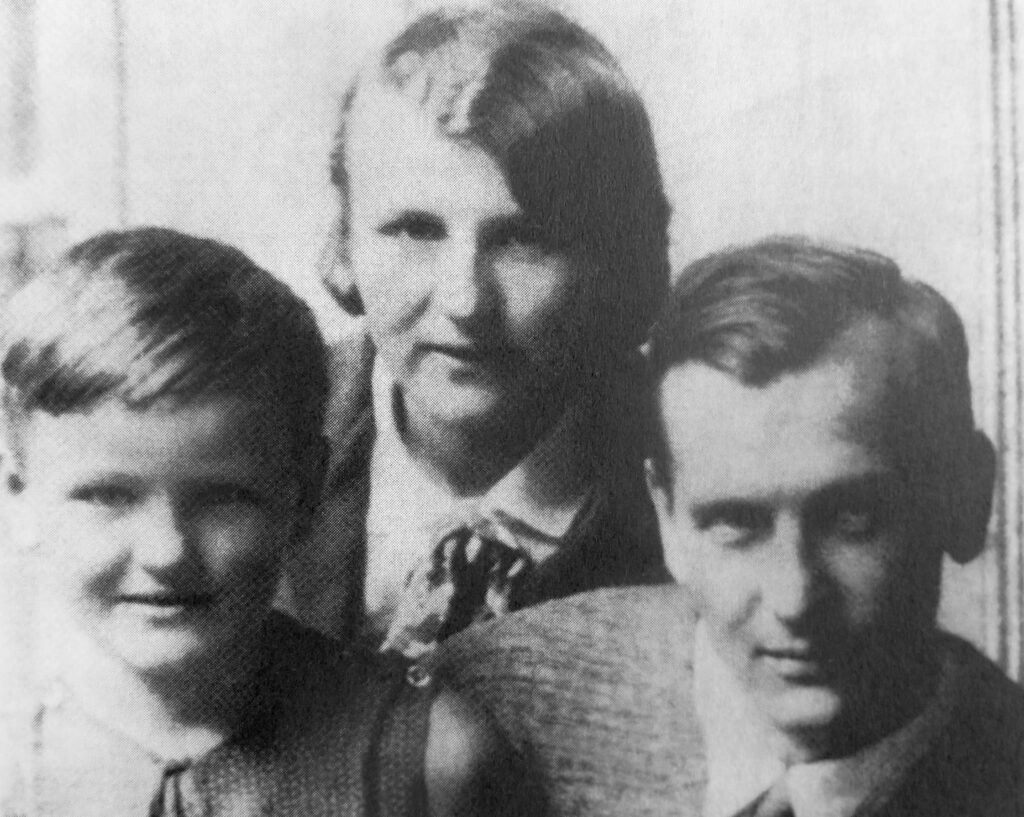
The Šverma family’s emigration to the Soviet Union was a direct consequence of the political developments following the adoption of the Munich Agreement in the autumn of 1938. Prominent representatives of the Communist Party of Czechoslovakia were gradually leaving for Moscow at that time to escape the impending repression. Among them was Jan Šverma, who left Czechoslovakia in November 1938. His wife and daughter were soon to join him: 13“That was after Munich; it was clear what fate awaited our republic. My parents were well-known anti-fascist activists; my father was a Communist MP and editor-in-chief of Rudé právo. It was clear that he was in danger, and so it was decided that he would emigrate to the Soviet Union.” 14
Although Jiřina and her mother had initially considered staying in Czechoslovakia and joining the Communist Party’s underground activities, they eventually left to join Jan Šverma in the Soviet Union. They travelled via Warsaw to Moscow at the beginning of 1939. The family were accommodated in the former Hotel Lux on Gorky Avenue, which had been converted into a residential facility for communist emigrants and officials from around the world. According to the memoirs of Jiřina Kopoldová-Švermová, the Švermas occupied two rooms there, and among the hotel’s residents were, among others, Bohumil Šmeral, Klement Gottwald, Václav Kopecký and Rudolf Slánský. The hotel had around three hundred flats, was strictly guarded by Soviet security, and its residents formed a closed community with very limited opportunities for contact with Moscow society. Upon arrival, Jiřina started school, but first she had to learn Russian and adapt to the different Soviet school environment. Meanwhile, her parents became fully involved in party and exile work: Marie Švábová joined the Czech editorial team of the Moscow-based foreign service, and Jan Šverma was sent to Paris in the spring of 1939 to head the activities of the Communist Party of Czechoslovakia’s foreign bureau. Following the defeat of France, he returned to the Soviet Union in June 1940 via Italy, Yugoslavia and Bulgaria. 15 “Our time together in Moscow, however, did not last long. As early as the spring of 1939, my father was sent to France to set up the CPC secretariat for Western countries in Paris, to publish the Czech edition of the magazine Světový rozhled, but above all to unite the progressive forces of Czechoslovakia into a broad national front in the struggle against fascism and for the liberation of the republic. In this regard, he also held talks in Paris with President Beneš.” 16
After the defeat of France, Jan Šverma returned to the Soviet Union in June 1940 via Italy, Yugoslavia and Bulgaria. As a member of the Moscow leadership of the Communist Party of Czechoslovakia (KSČ), he worked in the Comintern, the international organisation of communist parties controlled from Moscow, and from 1941 he also served on the All-Slavic Committee. At the same time, he was involved in preparing the Czech broadcasts of Moscow Radio. The family’s situation changed radically following the invasion of the Soviet Union by Nazi Germany on 22 June 1941. The rapid advance of German troops brought the front to Moscow in the autumn of that year, and on 17 October the evacuation of government offices, foreign embassies and the Comintern began.17
“We were reluctant to say goodbye to blacked-out Moscow, which in those days had begun to prepare intensively for defence. My father, in particular, was unhappy about having to leave the city he loved so much. He firmly believed that it was near Moscow that the decisive turning point in the course of the war would occur, and he wanted – as always – to be right there in the thick of it. On top of all that, I was mourning our Terinka – the little dog we’d taken in as a stray in Moscow and had to leave behind during the evacuation. We spent almost a whole week on the train, travelling eastwards – we didn’t even know where to. Our destination was Ufa – the capital of the Bashkir Autonomous Soviet Socialist Republic, which became our temporary home for many months.” 18
Whilst Jan Šverma had to return to Moscow soon afterwards to continue his work at the Comintern, Jiřina remained in Ufa with her mother. The city was overflowing with evacuees from the western parts of the Soviet Union and was struggling with a shortage of housing and food. Jiřina and her mother lived in the building of the Geological Institute, and she herself was completing her Soviet ten-year school education in the 1941/1942 academic year. In the summer of 1942, she passed her school-leaving exams with excellent results, which allowed her to continue her university studies without entrance exams. She wanted to study architecture or chemistry in Moscow, but a return to the capital was not possible. She therefore worked as a laboratory assistant at the evacuated Moscow Bacteriological Institute in Ufa, which produced vaccines and serums; she helped out at the local hospital and took part in a work brigade at a horse farm belonging to the institute. 19
In November 1942, Jiřina Švermová returned to Moscow, where she enrolled to study architecture. At the same time, she spent some time helping her father at the radio station and, as a newsreader, read out war reports to Yugoslavia. “In Moscow, I enrolled at university and began my studies. At the same time, I tried to give a little care and attention to my dad, who had spent the whole year here on his own, during the hardest days of the defence of Moscow, whilst under an immense workload. After my arrival, the supply situation improved somewhat – at the collective farm market, you could occasionally buy vegetables, milk or cottage cheese, and even a little meat outside the ration. So I would sometimes prepare a hot dinner and, especially on Sundays, a nice lunch. Then we would usually go for walks together, which we both loved so much; we reminisced about home and Mum and made plans that we would soon return to Prague and all three of us would live together again.” 20 In the spring of 1943, her mother Marie also returned to Moscow, and the family was reunited after a long time apart. But Jiřina was already beginning to consider joining a Czechoslovak military unit in the Soviet Union. 21
The events of spring 1943 provided the impetus for this momentous decision, when the Czechoslovak military unit in the Soviet Union took part in fighting on the Eastern Front for the first time, near the village of Sokolovo, not far from Kharkiv. News of the unit’s combat deployment was reaching Moscow, and one piece of news particularly caught Jiřina’s attention: the information that women were also serving near Sokolovo. She later remarked that she had seen an article in the newspaper about the Czechoslovak unit and a photograph of a “smiling girl in ušanka (a fur hat)”. 22 The Czechoslovak soldiers themselves were also in Moscow at the time: “Many of them came to see us when they were on duty in Moscow or when they were returning to their unit after recovering from injuries. They told us about our unit’s first combat deployment near Sokolovo and about how bravely our girls had behaved in that first battle. And it was then that I decided to enlist in the unit myself. I was convinced that it was there, on the front line, that the decision would be made as to when fascism would finally be defeated and when we would be able to return home and realise all the plans my dad and I had talked about.” 23
Jiřina saw serving at the front as a natural moral duty: “At the time, it was clear to me that for a young person, and especially in the area where I lived amongst Soviet youth, the only possible life choice was simply to go to the front and fight, because that was what would decide whether we would live as honourable, normal and free people, or whether Hitler would simply steamroll everything here and that would simply be the end of our lives. So I enlisted in the Czechoslovak military unit…” 24 She announced her decision to her parents as a fait accompli. As her mother later recalled: “It wasn’t exactly easy for Honza and me – she was our only child. But what were we to do when, in response to our bewildered looks, she simply declared: ‘You raised me this way, so this is what you get.’ And so it was decided.” 25
Her enthusiasm, however, had to wait a while, because in the spring of 1943 the Czechoslovak unit was withdrawn from combat and reorganised into a brigade. She therefore did not travel to the town of Novokhopyorsk (Voronezh Oblast, Russia), where the unit was concentrating, until August 1943, accompanied by Colonel Heliodor Píka (1897–1949) 26, then head of the Czechoslovak military mission in the USSR. Upon arrival, she was assigned to the staff company of the 3rd Signals Section as a clerk, mainly due to her excellent knowledge of Russian. She was not particularly pleased with this, as she had imagined her participation in the war differently than in an administrative role. However, she was given the opportunity to undergo basic military training and, as part of her service in the signals section, she gradually trained in the trade of a signals operator. In Novokhopyorsk, she also became involved in the activities of a Communist cell operating secretly within the unit. When the final exercise and the brigade’s ceremonial parade took place on 16 September 1943, during which Jiřina Švermová also took her solemn oath, her father, Jan Šverma, was among the distinguished guests present. 27
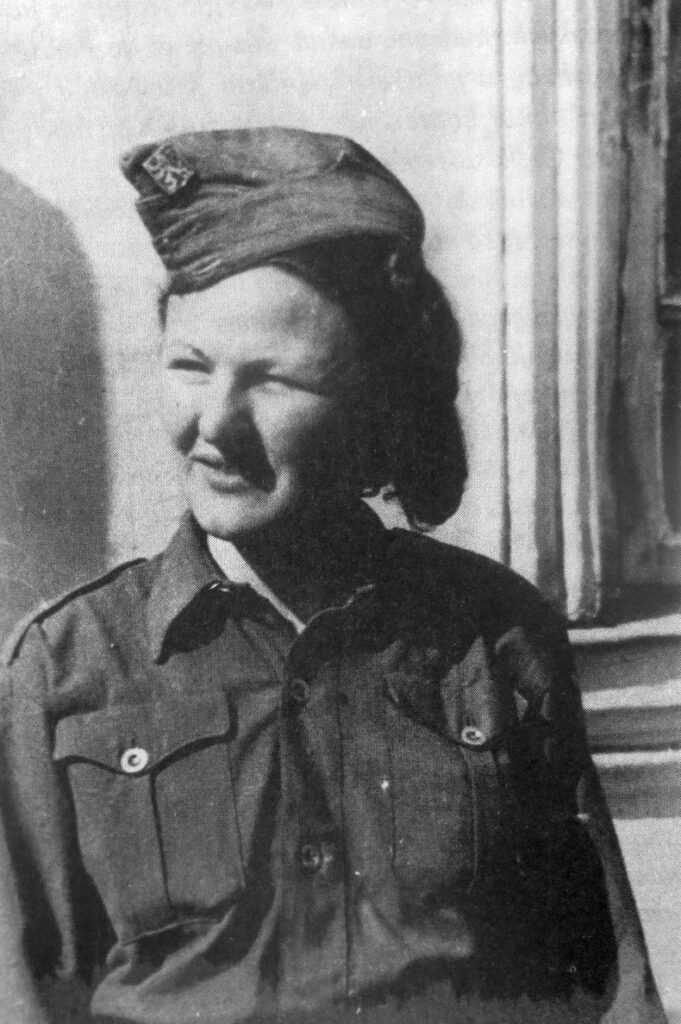
Jiřina Švermová’s decision to join the army was not unusual in the context of the time. She became one of around a thousand Czechoslovak women who, for various reasons, joined Czechoslovak military units in the USSR during the war. However, their status remained provisional from a legal standpoint for a long time, as the Czechoslovak Republic’s interwar Defence Act did not recognise military service for women and provided only for compulsory military service for men. The involvement of women was the result of a combination of the army’s practical needs, the precedent of women serving in the Red Army, an initial shortage of soldiers, and the strong personal motivation of the women themselves. The first conscription of women took place as early as February 1942 with the tacit consent of the unit commander Ludvík Svoboda, and what was originally a provisional measure gradually became a standard part of the unit’s operations. Legal recognition was only provided by the decree of the President of the Republic of 15 May 1944 on the status of women in Czechoslovak military units, which allowed them to serve in the military, but only for the duration of the war. Female soldiers found employment in a wide range of roles – from administration and medical services to the signals corps, where Jiřina Švermová also served for most of her military service. 28
An important source for understanding Jiřina Švermová’s wartime experience are her personal diary entries. She realised she was in the midst of extraordinary events, and so decided to record the course of her combat journey from the moment she left for the front on 1 October 1943. The very first entry captures the atmosphere of the departure succinctly and vividly: “Farewell, Novokhopyorsk! Rushing about from early morning, then waiting all day, until finally in the evening we boarded the 29 train – and off we go. There are 18 of us girls in one carriage.” 30
She kept her notes in two small pocket diaries until 17 May 1945, when the 1st Czechoslovak Army Corps in the USSR took part in a ceremonial parade in Prague. Thanks to their small size, she always had the notebooks to hand and, in her spare moments, jotted down brief notes and short sentences in them. The notes are predominantly factual and laconic in nature, yet they do not merely describe events. The author also recorded her feelings, moods, state of health and immediate reactions to the situations she was experiencing. “Another lovely day today – the trees are ablaze with the most beautiful colours of autumn, but the fighting continues. God, when will one be able to simply observe this and not have to think about this wretched war!” (9 October 1944) 31
The result is a continuous record that captures not only events in her immediate surroundings, but also the broader military and political context as it reached Czechoslovak soldiers through daily orders, army publications and word of mouth. Historian Alena Flimelová-Vitáková, who prepared the diary entries for publication in 2015,32 therefore points out that Jiřina Švermová was commenting on events practically “live”, which makes her notes an exceptionally valuable source of a personal nature. “Shrapnel is flying around here every minute. Yesterday a large piece fell right next to me – you realise what a matter of chance it all is, whether you’ll live or not. We’ve also had a few wounded.” (7 September 1944) 33
Despite the brevity of her entries, Jiřina Kopoldová managed to capture the reality of life at the front convincingly in her diary. Her notes reveal the harsh conditions in which the men and women of the unit had to live and work: constant relocations, the cold, filth, the difficulty of finding shelter, a lack of privacy, and basic concerns about food, hygiene and rest. “Today I was in such a mood that I had to go out so that no one would see I’d been crying. I was left alone without a flat, and I felt so down that I really didn’t know what to do.” (10 February 1944) 34 “We’re moving – and we’re standing still. And here we go again – convoy after convoy. Unfortunately, there are some nasty women in our carriage, and on top of that so many men that we can’t even wash ourselves.” (27 March 1944) 35
It is precisely for this reason that we can also regard her notes as a valuable contribution to our understanding of the everyday history of Czechoslovak soldiers on the Eastern Front. The diary is also of particular value as the personal testimony of a young woman and soldier. Although Jiřina grew up in the milieu of the communist movement and undoubtedly sympathised with communism, she scarcely touched upon her political convictions in her wartime notes. The diary is not burdened by ideological proclamations or sentimental patriotic phrases; yet her strong attachment to her homeland, which she had to leave with her parents as a fifth-year grammar school student, is evident from the context. “Wonderful – our brigade is already at the Soviet-Polish border. I’m absolutely miserable – we’ll be hanging about here on the train – and our lads are already home.” (12 April 1944) 36
According to Alena Flimelová-Vitáková, the significance of Jiřina Švermová’s wartime notes can be compared to the memoirs of “veterans of the fighting”. Although the main burden of frontline combat fell on men, it was the Second World War that saw significant involvement of women, particularly in the army’s support units. Jiřina Švermová was among those who entered service of their own volition and contributed to the functioning of the military through their daily work. Her diary thus represents not only the personal testimony of a young female soldier, but also evidence of the less visible yet vitally important work of women in the Czechoslovak army on the Eastern Front. 37
Private Švermová’s next posting was to the 5th Signals Section of the headquarters of the 1st Czechoslovak Independent Brigade in the USSR, where she was already directly involved in frontline combat – she took part in the Battle of Kyiv, which began on 4 November, as part of the brigade staff, which advanced behind the fighting units. Shortly after the capture of Kyiv, she requested a transfer to the signals company and in November 1943 became a member of the so-called radio squad assigned to the brigade staff, which operated the brigade command radio station. As a radio operator, she subsequently took part in all the brigade’s battles during the liberation of Ukraine. 38
She later recalled her service: “That’s where the normal duties of radio operators began, as signallers, where we were in charge of a single radio. We took turns; there were three of us, and we were either on duty for twelve-hour shifts or as required, depending on how the situation developed. Our station was assigned to the headquarters of the First Brigade, so we simply ensured communication with our units, with the battalions and with other subordinate units.” 39 Basic communication was normally maintained primarily via telephone lines, but during movements and in rapidly changing combat situations, radio communication became of crucial importance. The work of a radio operator was therefore an extremely responsible one: contact with subordinate units had to be maintained even under rapidly changing frontline conditions. Thanks to her expertise, Jiřina Švermová was promoted to lance corporal in early December 1943. 40
At the front, she faced not only the demands of communications work but also the immediate loss of people she knew personally. On 15 November 1943, she wrote in her diary about the death of Štefan Tuček, with whom she had travelled to the unit in Novokhopyorsk in August of that year: “But one terribly sad piece of news – Štefan Tuček has fallen. I’m so sorry – this nasty, evil, terrible war! Such a great lad, a former Slovak partisan. They found him in a tank, his legs shattered, his right cheek burnt, and he was holding a revolver in his hand.” 41
During further fighting in Ukraine in December 1943 and January 1944, she worked as a radio operator at the brigade headquarters. As she writes in an entry dated 30 December 1943: “In the evening we are in Krasnolesy. And it began. We had to establish contact quickly (there was only a radio, no telephone), so it was all down to us. […] All day at the radio. If only we could have slept, but the room was full of people, coming and going, shouting into the radio – well, simply the headquarters during the fighting.” 42 Service was particularly demanding during the fighting near Ostrożany in mid-January 1944, where signalmen and signalwomen maintained communications under enemy fire and practically in the midst of combat. In addition to the immediate danger, the signals company also faced considerable physical and mental strain, as the radio operators had to monitor individual transmissions closely for long hours and even whole days. 43
For her performance in these battles, Jiřina Švermová was rewarded with another promotion: in February 1944, she was promoted to corporal. “I got another stripe – wow, I’m a corporal now, I’m having a ‘military career’. But I’d rather it all came to an end quickly.” (16 February 1944) 44 In May 1944, she received the Czechoslovak Medal “For Bravery in the Face of the Enemy” from the brigade commander, Colonel Ludvík Svoboda, and from mid-May 1944 she underwent further specialised signals training, focusing, among other things, on the construction of radio antennas. In June 1944, she was transferred to a non-commissioned officers’ course, which she regarded more as a duty than a personal choice. “I have been assigned to the course for deputy signals officers. There are some lads from the signals platoon there, as well as veteran front-line women from other units. Although I’m not thrilled about being assigned to the course, an order is an order.” (20 June 1944) 45 Shortly afterwards, she was assigned to Anti-Tank Artillery Regiment 2, where she took up the post of deputy signals officer on 5 July. At the same time, she served as an instructor, training new radio operators originally from Volhynia. 46
By the end of summer 1944, the 1st Czechoslovak Army Corps in the USSR, which at that time numbered over 16,000 men and women, was preparing for further combat deployment. Following the outbreak of the Slovak National Uprising at the end of August 1944, it was rapidly redeployed to the Carpathians with the aim of breaking through the mountain passes to assist the insurgents. The Carpathian-Dukla Operation, launched on 8 September 1944 and conducted jointly by Soviet and Czechoslovak units, met with fierce resistance from German and Hungarian forces in the challenging mountainous terrain. The original plan to quickly penetrate into Slovakia and link up with the insurgent forces failed to materialise. Although Czechoslovak units crossed the Dukla Pass on 6 October 1944 and entered Slovak territory, they were unable to provide assistance to the Slovak National Uprising.47
It was here that Jiřina Švermová found herself in immediate danger of her life. As early as 9 September 1944, near the village of Machnówka in what is now Poland, she experienced a fierce mortar ambush by the German army whilst serving in an anti-tank artillery regiment. Although she herself escaped injury only by a stroke of luck, she helped the other wounded in the ensuing chaos. The ambush had severe consequences for the unit: of the approximately 340 men and women, seven were killed and around twenty wounded. 48
Her comrade-in-arms and friend Věra Tichá, née Hechtová (1922–2012), later also recalled the situation following the mortar attack. 49 According to her recollection, “Jiřina Švermová remained alone with the wounded of the 2nd Artillery Regiment. The brave Dr Sonnenschein from the medical patrol had remained there, and the young Volhynian girls were also helping as best they could, but the heavy mortar attacks on Machnówka did not cease and the number of wounded was growing. In this situation, Jiřina managed, by her example, to overcome the confusion and panic that had gripped many. Risking her own life, she carried the wounded away, dressed their wounds and led or carried them to the cars. The taciturn Jiřina, so much like her father Jan Šverma, showed admirable bravery in this battle.” 50
In Jiřina Švermová’s diary we read:
“Machnówka! Today, Mánička 51 and I were very lucky. Even before dawn, they were driving us all – the artillery, the infantry of the 1st and partly also the 3rd Brigade – around a village. The Germans could see us clearly and began laying mines. One fell into the house where Mánička and I were just boiling potatoes. We ran outside, and no sooner had we crouched down by the barn wall than the second and third came. There were plenty of wounded. We dressed their wounds as long as we had enough bandages.” (9 September 1944) 52
She experienced similar dramatic moments in the weeks that followed. Repeated mortar attacks and the constant threat to life were reflected in her diary entries with increasing clarity: alongside factual records, they revealed fatigue, mental strain, as well as the realisation that prolonged stress was beginning to take its toll on her own resilience.
“Mánička and I had another narrow escape from hell. We were sitting in the dugout with the staff officer; we were just about to go out – and suddenly, bang – a mine landed right next to the dugout. All five people standing there, almost the entire staff, were seriously injured. Once again, hands covered in blood, bandages and frayed nerves. It’s interesting – back in Machnówka I wasn’t afraid at all, but lately my nerves have really been frayed.” (19 October 1944) 53
It is precisely the passages relating to the Carpathian-Dukla operation that are among the most striking in her diary. They capture not only the heavy losses and constant threat to life, but also the gradual exhaustion of the soldiers, both men and women, as a result of the protracted fighting in the difficult Carpathian terrain.54
It is precisely the passages relating to the Carpathian-Dukla operation that are among the most striking in her diary. They capture not only the heavy losses and constant threat to life, but also the gradual exhaustion of the soldiers, both men and women, as a result of the protracted fighting in the difficult Carpathian terrain.
(18 November 1944) 55
Moreover, in the chaotic conditions of the Carpathian-Dukla operation, incomplete and erroneous reports on the losses of individual units were reaching the rear. A similar alarming report also concerned Jiřina Švermová. As her mother later recalled, she was waiting in Moscow at that time for any news from her daughter with great anxiety, especially as she was also receiving unsubstantiated information suggesting that her Jurka was among those killed in the first battles at Dukla. She did not hesitate to send a telegram directly to Ludvík Svoboda, who refuted this rumour, as did a letter from Jiřina herself dated 11 October 1944: “That alarmist report that I had been killed was circulating here for several days. It probably started because a girl from our regiment – also a radio operator, tall and slender – was seriously wounded and died. Well, I suppose everyone thought it was me.” 56
In September 1944, Jiřina Švermová was promoted to the rank of sergeant and shortly afterwards to second lieutenant. Her service was also recognised with a decoration – on 4 November 1944, she was awarded the Czechoslovak War Cross 1939 for her part in the battles for the town of Dukla and the Dukla Pass. On 28 October 1944, she was transferred from the 1st Czechoslovak Independent Brigade to the headquarters of the 1st Czechoslovak Signal Battalion, which was then operating in the village of Barwinek. For approximately two months, she served as a platoon commander at the battalion’s signal headquarters. 57 She later recalled the conditions of service: “Here, the network of radio stations was significantly expanded, their range of operation increased, and the quality of their operation improved. Qualified radio operators from the ranks of the Slovak army, who had defected to the Red Army and were then released from prisoner-of-war camps to serve in our military unit, were stationed here. A woman in the uniform of a Czechoslovak soldier, and indeed an officer, was an unprecedented sight for them at that time, so we all – both us girls and them – had to gradually get used to one another.” 58
The atmosphere of this period is well captured in a letter that Jiřina Kopoldová wrote to her mother on 1 December 1944 during night duty: “I’m on night duty today; it’s already half past three in the morning, everything here is slowly falling silent, and I can write a letter in peace. I don’t know when you received my last letter, but the situation has changed since then, and we have managed to advance a little further after all. We are now in a small Slovak village in the foothills, which, surprisingly, is relatively intact compared to others, although there are a few burnt-out cottages and half-ruined houses here. But as soon as we arrived here, an unusual silence weighed heavily upon us. The village really is as if deserted. The Germans have driven all the inhabitants away with them – apparently they’re doing this in every village.” In the same letter, she also captured a brief moment of relative comfort after long weeks of frontline movement:
“For now, we’re managing on our own in the cottage. I can’t even remember the last time we were under a proper roof. There are six of us girls living here in one little house. When we light a fire, it’s quite cosy. And we’ve found huge tubs there, so we’re having a bath one after the other.” It is precisely the contrast between the abandoned village, the brief respite of everyday comfort, and the uncertainty of what lies ahead that emerges in her closing reflection: “You know, Mum, I never thought we’d have to fight our way back to our country so hard. And I never imagined that the little villages we’d come across would be burnt out, destroyed and dead.” 59
In January 1945, Jiřina Švermová was released from the Corps Signal Battalion and transferred to the Education and Publicity Department of the 1st Czechoslovak Independent Brigade, where there was a shortage of staff capable of handling both Czech and Russian administration. She served as head of the office of the education department, compiled reports from battlefields around the world for the brigade bulletins, gathered information on the combat activities of individual units, and also participated in the establishment of national committees in the liberated Czechoslovak territory. During this time, she became closely acquainted with the public relations officer Bedřich Kopold (1921–2007), who was in charge of publishing the newspaper Naše vojsko v SSSR (Our Troops in the USSR). Kopold came from a Jewish family in Moravian Ostrava; in October 1939, he was deported to an uninhabited area of south-eastern Poland as part of the so-called Nisko Action (editor’s note: just available in Czech), from where he fled to the Soviet Union and later joined a Czechoslovak military unit in the USSR. They married in 1947. 60
The gruelling nature of Jiřina Švermová’s work at the time was also reflected in her diary entries, which are by this stage of the war only sporadic. The most profound personal blow for her during this period was the belated news of the death of her father, Jan Šverma. After the war, she stated: “When we crossed the Carpathians together with the Red Army soldiers and fought our way through Slovakia, I was convinced that I would see my father very soon and that we would discuss everything in person. I knew he had been sent to Banská Bystrica to support the Slovak Uprising, so I counted every kilometre we advanced westwards, bringing me closer to Dad.” 61 Jan Šverma, who as a member of the War Council at the General Staff of the Partisan Movement in Czechoslovakia took part in the Slovak National Uprising, had in fact died on 10 November 1944 during the retreat of the insurgent forces into the mountains. 62 When she heard the news on 21 February 1945, she wrote: “Today they told me the truth. They kept it from me; I don’t know why. Surely one has to find out. Dad is no longer with us. My wonderful, amazing dad has died. When I repeat it to myself, I still can’t believe it. I cannot come to terms with the thought. 10 November, during a difficult crossing of the mountains… Better not to think about it. I can see him before me, tired, exhausted – he didn’t make it. What a day it could have been today, a day of reunion; instead, this terrible news.” 63
In early April 1945, a Czechoslovak delegation led by President Edvard Beneš arrived in Slovakia, and Jiřina was finally able to meet her mother. However, she returned to her unit, which had in the meantime moved to Vrútky. The end of the war found her in Fryšták in the Zlín region, from where she reached Prague on 14 May 1945. 64 The final entry in her war diary also relates to the ceremonial parade of the Czechoslovak Army on 17 May: “Today I can’t feel my legs at all. We’ve been walking or standing since morning – there was a parade – perhaps the last one of my life. We marched across Wenceslas Square to Old Town Square, where the President was standing. Shouts, waving. Finally, after a long and arduous journey, we are in Prague. It feels like a dream!” 65
For her service in the Czechoslovak Foreign Army, Jiřina Švermová was awarded the Czechoslovak War Cross 1939, the Czechoslovak Military Medal “For Bravery in the Face of the Enemy”, the Soviet Medal “For Victory over Germany in the Great Patriotic War 1941–1945”, the Soviet Medal “For Combat Merit”, the Silver Medal of the Czechoslovak Military Order “For Freedom”, the Czechoslovak Military Commemorative Medal with the USSR badge, the Dukla Commemorative Medal, the medal “For the Liberation of Prague”, the Czechoslovak “Order of the Red Star” and other Czechoslovak, Soviet and Ukrainian orders and medals. 66
Jiřina Kopoldová-Švermová later recalled the period following the end of the Second World War primarily as a time of return, reunion and the painful process of coming to terms with the losses the war had brought to her family: “I met my mother in the first post-war days in Prague. How did life unfold for our small family, which had shrunk even further after my father’s death? Our first steps then led us to my mother’s and father’s relatives. Our families had suffered greatly during the Nazi occupation. Ten of their members were taken to fascist concentration camps and prisons. Two of them perished there. Many of them had been imprisoned as hostages for my mother or father. When they gradually returned home after their ordeal, they learned with grief that Jan Šverma was no longer alive.” 67 In November 1945, Šverma’s state and military funeral took place. The funeral procession began on 10 November 1945 in Podbrezová, Slovakia, continuing via Banská Bystrica, Bratislava, Brno and Prague, where the coffin containing his remains was displayed in the Pantheon of the National Museum. The following day, Jan Šverma was buried in his hometown of Mnichovo Hradiště. 68 Shortly after the war, his memory became part of the official Communist commemoration of the anti-fascist resistance, and after February 1948 it developed further into a state-sponsored cult of the hero. His name was given to villages, streets, businesses, schools and public spaces, and monuments and other forms of public commemoration were also erected. Formally, Jan Šverma was ranked among the most highly honoured figures in the Communist pantheon with the posthumous award of the honorary title Hero of the Czechoslovak Socialist Republic in August 1969. 69
After the war ended, Jiřina Švermová remained in the army for several more months. She helped establish the military broadcasts of Czechoslovak Radio and edited a column aimed at women in the army newspaper Za svobodné Československo (For a Free Czechoslovakia). In the autumn of 1945, she began studying chemistry at the Faculty of Science of Charles University, and in the spring of 1946 she left the army for good. She successfully completed her studies in 1950 with a PhD in Natural Sciences and joined the State Health Institute in Prague, where she specialised in microbiology. Shortly after her marriage to Bedřich Kopold in 1947, their son Jan was born, followed four years later by their daughter Bedřiška Marie. 70
Bedřich Kopold remained in the army after the liberation and rose rapidly through the military and political ranks. He was first appointed deputy head of the regional education administration in Brno and co-opted onto the local regional committee of the Communist Party of Czechoslovakia. In 1947, he moved to the Main Directorate of Education and Public Enlightenment of the Ministry of National Defence in Prague, where he gradually rose through the ranks from clerk to deputy head of the Main Political Directorate. At the same time, he served on the Communist Party’s defence commissions within the Czechoslovak Youth Union and, until 1950, as secretary of the Army Leadership for Party Work. 71
Marie Švermová, the mother of Jiřina Kopoldová, became one of the leading figures of the post-war Communist Party of Czechoslovakia after 1945: she was a member of the Presidium of the Central Committee of the Communist Party of Czechoslovakia and a member of the National Assembly. At the turn of the 1940s and 1950s, she participated in the political activities that accompanied the rise and consolidation of Communist power, including campaigns in support of fabricated political trials. Yet even as the widow of a hero of the anti-fascist resistance, she became a victim of the very same repressive machinery. In January 1951, she was arrested in connection with the case of Otto Šling, the Brno regional secretary of the Communist Party, and identified as one of the key figures in an alleged conspiracy within the party. It was only later that the attention of the investigators and Soviet advisers shifted to Rudolf Slánský, who, following his arrest in November 1951, was identified as the alleged leader of an ‘anti-state conspiracy centre’. 72 In the trial of Slánský in 1952, Karel Šváb (1904–1952), the younger brother of Marie Švermová and Deputy Minister of National Security until 1951, was also convicted and executed. Marie Švermová herself was sentenced to life imprisonment for high treason on 28 January 1954 in the so-called trial of the regional secretaries. In 1955, her sentence was reduced to ten years; she was released on parole in early October 1956 and rehabilitated in 1963. 73
During the same period, Bedřich Kopold was also arrested; in January 1951, he was charged with high treason, including for allegedly “sabotaging ideological activities within the army” and collaborating with Rudolf Slánský’s “conspiratorial centre”. On 1 April 1954, he was sentenced to eighteen years’ imprisonment. He served his sentence in the uranium camps in the Jáchymov and Příbram regions and in prisons in Prague-Pankrác and Leopoldov. 74
“In the early 1950s, however, everything changed for us. My mother and my husband, a soldier in Svoboda’s army, were arrested. I too was interned – with my little son Honzík and our elderly housekeeper. Jan Šverma’s second grandchild was born during these terrible times for me, under the supervision of a StB officer. It was a period of appalling public campaigns against those closest to me, whom I knew to be innocent. I could not understand what was actually happening. With pain, I recalled my father’s and mother’s colleagues, whom they both respected and considered their friends. They all turned their backs on them. They were unable to stand up and prevent such terrible, fabricated charges. They succumbed to the atmosphere of fear that they themselves had helped to create. It was not easy to struggle through life as the daughter and wife of men sentenced to long years in prison.” 75
Following the arrest of her mother and husband, Jiřina Kopoldová was interned outside Prague for political reasons in 1951–1952, together with her two children, in a cottage in the Hvozdy holiday resort. After her release, she was unable to return to her original professional work and in 1953 she took up a post as a chemist in the factory laboratory of the Prague textile company Tiba. It was here that the State Security approached her with a request to cooperate, to which she agreed in 1954 under intense pressure, on the condition that she would provide information about operations at the textile factory. However, the collaboration was short-lived and, according to available records, the StB terminated it as unproductive. 76
Jiřina Kopoldová’s mother had her life sentence reduced to ten years in 1955 and was released on parole in early October 1956. On 29 April 1956, the Attorney General ordered the suspension of her husband Bedřich Kopold’s sentence, and in early June of the same year, following a retrial, both the original verdict and the indictment were quashed. It was only now, following the release of her mother and husband from prison, that Jiřina Kopoldová was able to return to qualified scientific work: she joined the radiobiology department of the Institute of Biology of the Czechoslovak Academy of Sciences in Prague and later worked in the isotope laboratory, where she remained until her retirement. During her scientific career, she obtained a CSc. degree in organic chemistry, held a number of patents, and published dozens of specialist studies focusing on the use of radioisotopes in biological and biochemical research.
The family, including her mother, lived together in Prague-Dejvice in the years that followed. After his release and return from prison, Bedřich Kopold secured a post as an archivist at the Institute of Computer Science at the Czech Technical University. Both he and Marie Švermová were rehabilitated for their imprisonment in 1963.
And although the Kopolds continued to hold left-wing views and were active in the Communist Party, they were expelled from the party in 1970 as part of the ‘normalisation’ purges for supporting the reform process of the Prague Spring. In the second half of the 1970s, the family came under increased surveillance by the State Security, particularly in connection with Marie Švermová’s signing of Charter 77. Jiřina Kopoldová and her mother also found it particularly hard to bear the fact that they were not allowed to attend the official commemorations of Jan Šverma, whom the regime, paradoxically, continued to celebrate as one of its great heroes of the anti-fascist resistance. 77
After 1989, Jiřina Kopoldová, together with her husband Bedřich Kopold, actively devoted herself to documenting the Czechoslovak resistance in the Soviet Union, particularly the participation of women in foreign military units. Among other things, she was a co-author of a travelling exhibition on Czechoslovak women fighting abroad during the Second World War. She also contributed to the publication “Medailonky statečných: Sokolovo – Kyjev 1943–1998” (Portraits of the Brave: Sokolovo – Kyiv 1943–1998), a collection of portraits of members of the 1st Czechoslovak Army Corps in the USSR, published in 1998. 78 In 2004, she edited and provided an introduction to a collection of her father’s correspondence, “Letters to His Daughter” 79 , and in the same year, together with Bedřich Kopold, she published “Death Lurked in Chabenec: Jan Šverma in the Slovak National Uprising”. 80 She also prepared for publication her mother Marie Švermová’s memoirs, which were published in 2008 under the title “Memoirs”. 81 She was an active member of the Czechoslovak Legionnaires’ Association, the Czech Union of Freedom Fighters, the Historical Group of the 1st Czechoslovak Army Corps and the General Ludvík Svoboda Society. She remained active in public life until her final years, taking part in a number of events and gatherings. Jiřina Kopoldová-Švermová died on 14 February 2009, aged 85.82
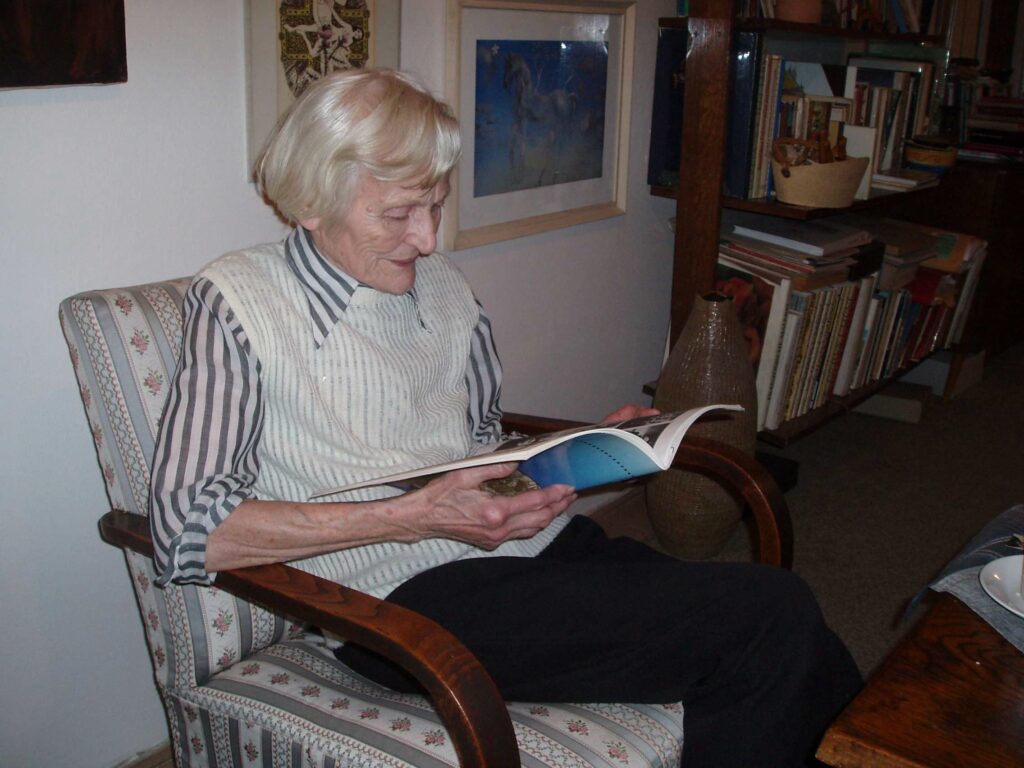
We can view the figure of Jiřina Kopoldová-Švermová from several perspectives: as the daughter of leading Communist officials, as a young, courageous woman who, under extreme conditions, decided to join the army and take part in fighting directly on the front line, and as a victim of the tyranny of the totalitarian regime. She managed to capture her wartime experience in a direct, unemotional and economical manner. In her diary entries, she describes the war not only as a series of military events, but also as the daily reality of long marches, uncertainty, fatigue, fear, brief moments of relief and the gradual return to a devastated homeland. Yet it was precisely this personal voice that remained largely in the background for a long time after the war, overshadowed by the official narrative of the communist resistance, the cult of her father Jan Šverma, and the experience of the political trials that affected her, her mother and her husband. The publication of her diary entries after many decades also serves as a reminder that the ‘women’s voices of war’ were often not silenced entirely, but frequently remained unheard for a long time, pushed aside or read only through the stories of men, institutions and political myths.