


Přihlaste se do našeho newsletteru!
The five articles of the series ‘Echoes of Women’s Voices of War’ have so far featured five women whose life stories were linked to the territory of what is now the Czech Republic. They stood up to Nazi violence in various ways. Marie Kudeříková became involved in underground activities and the planning of acts of sabotage, whilst Marianne Golz-Goldlust’s flat in Prague served as a meeting place and a refuge for the persecuted. As a radio operator, Jiřina Kopoldová-Švermová maintained communications between Czechoslovak units on the Eastern Front. Emílie Machálková and her family hid relatives from deportation and later went into hiding herself to avoid forced sterilisation. Růžena Danielová tried to protect her children at the Auschwitz-Birkenau concentration and extermination camp and sang a song expressing the experiences of imprisoned Roma and Sinti.
Yet their stories represent only a small selection from a much broader spectrum of women’s actions. So what exactly can we classify as personal defiance, broader resistance or organised resistance? This article examines the various forms these attitudes and actions took and also suggests why some of them remained overlooked for so long.
At the most personal level, we can speak of defiance. By this term we mean the decision not to submit to a specific order, intervention or humiliation. It could take the form of an immediate reaction in an extreme situation or a deliberate and long-term stance. Those who engaged in such behaviour did not necessarily pursue a broader political goal, nor did they necessarily regard themselves as participants in the anti-Nazi resistance. Nevertheless, they consciously rejected the Nazi regime’s interference in their own lives, families or bodies.
The concept of oppositionresistance encompasses a broader range of individual and collective actions that rejected Nazi authority, thwarted its intentions or helped the people against whom its measures were directed. It need not have been based on membership of an underground organisation nor pursued a predetermined political programme. It could take the form of hiding those being persecuted, procuring food and documents, supporting the families of prisoners, flouting discriminatory regulations, or refusing to cooperate with the occupying authorities. It stemmed from political or religious convictions, but also from solidarity, family responsibility or a desire to help a specific individual.
The line between personal defiance and broader oppositionresistance was not clear-cut. Refusing a single order might remain an isolated act, yet one that proved decisive for the person at risk. At other times, initial assistance to a relative, neighbour or friend gradually developed into long-term activity and led to the formation of an informal network of people working together. The terms ‘defiance’ and ‘oppositionresistance’ therefore do not establish a hierarchy of values, but help to distinguish the nature, scope and circumstances of a specific act.
After all, society under the Protectorate cannot be described solely in terms of the dichotomy between resistance and collaboration. Between organised struggle against the occupiers and conscious collaboration with them lay a broad spectrum of forced adaptation, expedient compliance, dissent and occasional acts of oppositionresistance. Moreover, individuals’ attitudes could change depending on the course of the war, personal experiences and the level of threat they faced. Such a perspective also makes it possible to capture the actions of women, which left no trace in the records of resistance organisations. 1
Individual defiance and informal opposition often grew out of personal relationships and took place within the family and domestic sphere. Activities which contemporary society associated primarily with women (cooking, procuring food, washing, caring for the sick, or maintaining family and neighbourly contacts) might outwardly appear to be part of everyday life. However, when they ensured the survival of individuals living in hiding or of families threatened with deportation, they took on political significance. This did not stem from the nature of the work itself, but from its purpose, the circumstances in which it was carried out, and the risks involved. A telling example was Marianne Golz-Goldlust’s flat in Prague. It was not a secret headquarters of a resistance organisation in the usual sense. It hosted social gatherings of people from Czech, German and Jewish backgrounds, including those from artistic and intellectual circles. The natural comings and goings of visitors provided an opportunity to exchange information and establish contacts. At the same time, arrangements were made there to help Jewish friends and acquaintances threatened with deportation. Marianne Golz-Goldlust helped to procure documents, pass on money and arrange contacts designed to make it easier for those being persecuted to escape or go into hiding.
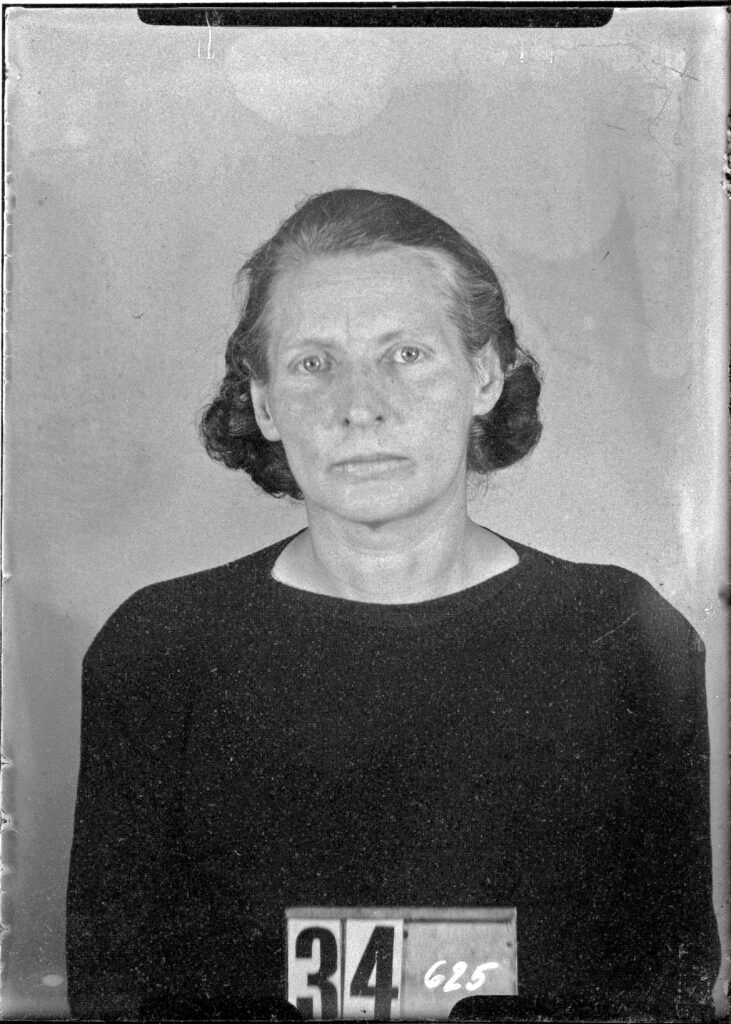
Such assistance was based on family, friendship and other personal ties, and on the willingness of individuals to carry out specific tasks. Those involved did not necessarily know one another or consider themselves members of a common organisation. One person might provide an address, another might procure a document, hold money in safe keeping or recommend a reliable intermediary. These individual acts thus formed an informal infrastructure of support. A household provided a base and credible cover, yet at the same time it was vulnerable. An unexpected search, a tip-off, an intercepted message or the testimony of an arrested person could endanger everyone involved.
The story of Marianne Golz-Goldlust thus offers a glimpse into the oppositionresistance of ‘ordinary people’ who stood outside the strictly defined structures of the resistance. We do not know the exact number of women involved in such assistance. Moreover, their activities often left no written records, as secrecy was a prerequisite for safety, and many individual acts were not documented after the war. As a rule, they only found their way into historical sources once the Gestapo had uncovered the aid, it had become the subject of legal proceedings, or it was later described by those who had been saved and their relatives.
The story of Emílie Machálková, née Holomková, also illustrates family-based opposition. Before her relatives were deported in March 1943 – having been labelled by the Nazi authorities as ‘racial Gypsies’ and ‘Gypsy half-breeds’ – to the Auschwitz II-Birkenau concentration and extermination camp, she took her young cousin Růženka into her care. The family also hid her grandmother and later provided refuge for other relatives. Some of the residents of Nesovice also played a part in their survival by providing food and helping to keep their whereabouts secret. The household thus became the centre of a wider community of solidarity. When Emílie Machálková herself was summoned for forced sterilisation, she went into hiding. Her decision meant not only escaping immediate danger, but also rejecting a violent intrusion into her own body and future.
The options available to women who themselves faced racial persecution were extremely limited. The Nazi authorities determined their movements, family life, bodies and, ultimately, their very right to exist. Under these conditions, not all the ways in which they sought to protect themselves and others can be collectively described as opposition. Efforts to survive and preserve the family, or to help one another, were primarily expressions of care and solidarity. Where these were linked to a deliberate breach of a specific regulation or prohibition, they could simultaneously take the form of individual defiance. Preserving relationships, identity, language, faith or cultural expressions could then constitute spiritual or cultural defiance. The story of Emílie Machálková shows that the various levels of behaviour could overlap. Taking little Růženka into her care was, above all, an effort to save her. However, hiding other relatives threatened with deportation to a concentration camp also constituted a deliberate thwarting of Nazi persecution measures. Hiding herself from forced sterilisation was, in turn, a direct rejection of violent interference with her body and her future.
Family ties took on particular significance in marriages and partnerships that Nazi regulations classified as ‘racially mixed’. Although the persecution of Jews and Roma differed in its course and legal mechanisms, in both cases racial policy intervened directly in family relationships. Staying by the side of a partner at risk, refusing to divorce, or protecting children and relatives could constitute a conscious rejection of the pressure intended to tear the family apart. Such behaviour was not usually visible in public, but it could be crucial to the survival of those being persecuted.
After deportation, the scope for action narrowed further. Yet even the experiences of imprisoned women were not uniform. The scope for them to make their own decisions was influenced not only by the type of detention facility but also by the reason for their imprisonment, their age, state of health, work assignment, position within the camp hierarchy, and the availability of family, friendship or other social ties. A ghetto or concentration camp was an environment designed to control, isolate and exploit the imprisoned people. Hunger, forced labour, disease, lack of privacy, separation and pervasive violence significantly restricted their ability to act. Nevertheless, various forms of mutual aid and action emerged here too, which, depending on the specific circumstances, could take the form of defiance or opposition.
Imprisoned women shared food, cared for children and the sick, passed on messages, maintained family ties and, depending on the specific circumstances, upheld religious or cultural traditions. Such behaviour could protect lives, interpersonal relationships and a sense of one’s own identity from a system based on violence and dehumanisation. 2
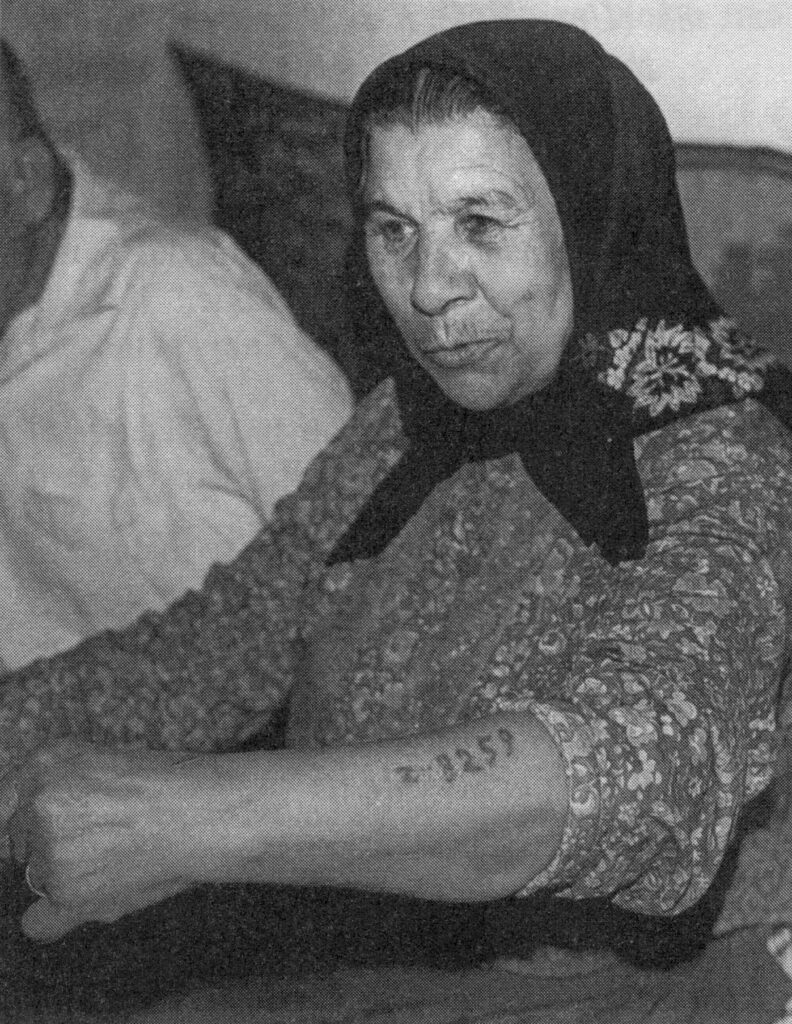
The intertwining of efforts to survive with the deliberate flouting of camp rules is illustrated by the experience of Růžena Danielová, who was deported with her husband and children to Auschwitz II-Birkenau. In the concentration camp, she sought out food first and foremost for her children, even though she was brutally beaten many times for doing so. This was not organised opposition against the camp administration, but a deliberate breach of the established rules and the acceptance of immediate risk in an effort to prolong the lives of her loved ones. The care that, in everyday life, was part of a mother’s responsibility took the form here of a daily struggle against inhuman living conditions.
Another aspect of her experience is captured in the song ‘Aušvicate hi kher báro’, meaning ‘In Auschwitz there is a big prison’. Its melody and basic themes apparently circulated amongst Romani male and female prisoners in various versions. Růžena Danielová combined these with her own experiences and, according to her post-war testimony, sang the song in the camp together with other prisoners. In it, she expressed hunger, separation, violence and anger towards the perpetrators. The song was thus not merely a lament, but also a testimony and an indictment of the camp system. Singing could not alter the balance of power or halt the persecution. However, it enabled the prisoners to articulate their own experiences, share them in their own language and maintain a sense of solidarity. In this sense, it could serve as a form of opposition against dehumanisation and silencing.
Whilst personal defiance and informal opposition might have arisen from an individual’s decision or from the loose cooperation of a few people, we generally use the term ‘resistance’ to refer to organised, targeted and more systematic activity directed against the occupying power. Its defining feature was not the use of arms, but a shared goal, the division of tasks, sustained cooperation and adherence to the rules of conspiracy. We use the terms ‘defiance’, ‘opposition’ and ‘resistance’ as analytical labels that help to distinguish the nature and level of organisation of actions; however, they do not automatically reflect how the participants themselves understood their actions. Moreover, the boundaries between informal assistance and resistance were not always clear-cut. A person who initially provided shelter to a relative or passed on a single message could gradually become part of a wider underground network.
Under the Protectorate of Bohemia and Moravia, no open armed struggle took place for most of the occupation. Whilst the first military resistance structures had planned to prepare an uprising should the war take a favourable turn, the Nazi repressive apparatus crushed a significant proportion of the first generation of the domestic resistance. Consequently, intelligence work, maintaining contact with the Czechoslovak government-in-exile, the publication and distribution of underground literature, assistance to people living in hiding, and acts of sabotage targeting production, transport or supply chains all took on greater importance.
The resistance did not, therefore, rely solely on armed actions and high-profile acts of sabotage. In order to function, it needed reliable communication channels, safe houses and hiding places, false documents, money, and materials for publishing leaflets and preparing acts of sabotage. It also depended on people willing to take on seemingly mundane tasks: delivering an envelope, obtaining paper or passing on a message. Every such step could lead to arrest and jeopardise the entire network. The significance of any individual task cannot therefore be assessed in isolation from the activities of other collaborators. Information obtained by an informant was of no use unless a courier could safely deliver it to the recipient. Similarly, a person operating underground could not continue their activities without a safe house, food, identity documents and contact with other members of the group. 3
The diversity of these interconnected tasks is well illustrated by the story of Marie Kudeříková. Over the course of several years, she was involved in transporting clandestine consignments and messages, smuggling people across the border, maintaining contact between individual cells, reproducing and distributing leaflets, and procuring materials, weapons and explosives. She also took part in acts of sabotage at factories and on the railways.
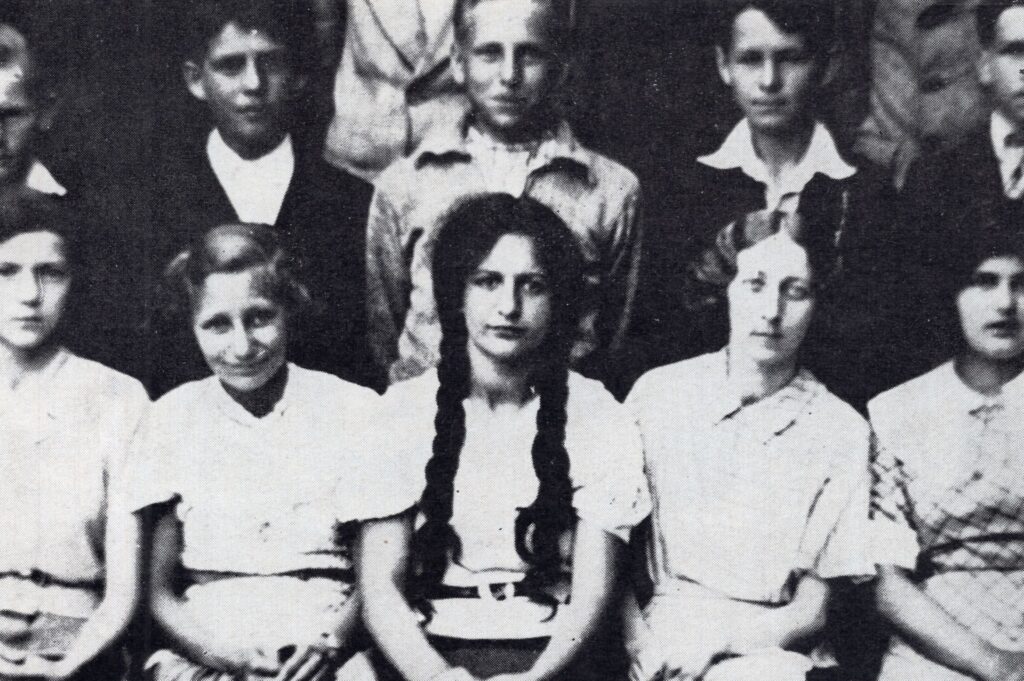
Women active in the resistance did not form a socially or professionally homogeneous group. Among them were politicians, teachers, doctors, nurses, civil servants, factory workers, artists and women with no previous public involvement. Their motivations and paths to resistance work also varied. Some joined on the basis of political, national or religious convictions, whilst others became involved in the network through relatives, friends or colleagues. Personal relationships, which formed the basis of informal support, could thus also serve as a means of recruiting reliable collaborators.
Initially, women’s involvement in clandestine activities may have been aided by the prevailing assumption at the time that they did not participate in political or military affairs. Their daily journeys to work, for shopping or to visit relatives could also provide them with cover whilst carrying messages and materials. Women in resistance organisations acted as liaisons, couriers and informants, but also as organisers of meetings, authors and duplicators of underground texts, or direct participants in acts of sabotage. To label all these activities merely as ‘supporting’ would obscure their significance for the functioning of the entire network. Moreover, the relative advantage of arousing less suspicion was only temporary and certainly did not mean there was less danger. As soon as the Gestapo uncovered women’s links to resistance structures, they faced arrest, violent interrogation, imprisonment and even execution, just like their male colleagues. 4
The extent of women’s involvement was particularly evident in their support for Czechoslovak paratroopers sent from abroad. The paratroopers needed safe contacts, accommodation, food, civilian clothing, false documents and links to other sections of the resistance. The Nazi reprisals following the assassination of the Acting Reich Protector Reinhard Heydrich therefore affected not only the paratroopers themselves, but also a wide circle of their female and male helpers and relatives. In three waves of executions, 294 female and male collaborators and relatives of Czechoslovak paratroopers were murdered at the Mauthausen concentration camp, 150 of whom were women. This proportion clearly demonstrates that women were not on the fringes of the organised resistance, but formed a substantial part of its support network and personal connections. 5
The Czechoslovak resistance in exile and the armed forces were formed outside the occupied territory, but their aim was to contribute to the defeat of Nazi Germany and the restoration of Czechoslovakia. Women’s involvement took two main forms: civilian work within the political, social, cultural and media structures of the exile community, and service in Czechoslovak or Allied military units.
In the centres of exile, women worked in expatriate and women’s organisations, the Czechoslovak Red Cross, social services, editorial offices and radio stations. They organised fundraising campaigns, assisted refugees, provided childcare, ran educational courses and helped to sustain the cultural life of Czechoslovak communities. At the same time, through the press and radio broadcasts, they reached out to listeners in their occupied homeland. However, leading diplomatic and political positions remained largely reserved for men. Among the few women active directly within the political structures of the exile community was Anežka Hodinová-Spurná, a member of the Czechoslovak State Council and a representative of Czechoslovak women’s organisations in the United Kingdom.
Military service represented a second sphere of activity. Women usually joined foreign units on a voluntary basis, though their numbers and ranks differed between the East and the West. During the war, nearly a thousand women joined the Czechoslovak military units formed in the Soviet Union. Initially, this was a legally provisional arrangement, as the pre-war Defence Act did not provide for women’s service. Their status was not regulated until a decree by the President of the Republic in May 1944. More than two hundred Czechoslovak women served in Great Britain and the Middle East, though not in a separate Czechoslovak women’s corps. They mainly joined the British auxiliary corps. Despite the initial reluctance of the Czechoslovak authorities-in-exile to accept women into the army, they gradually secured the opportunity to take up military service and gained official recognition for it.
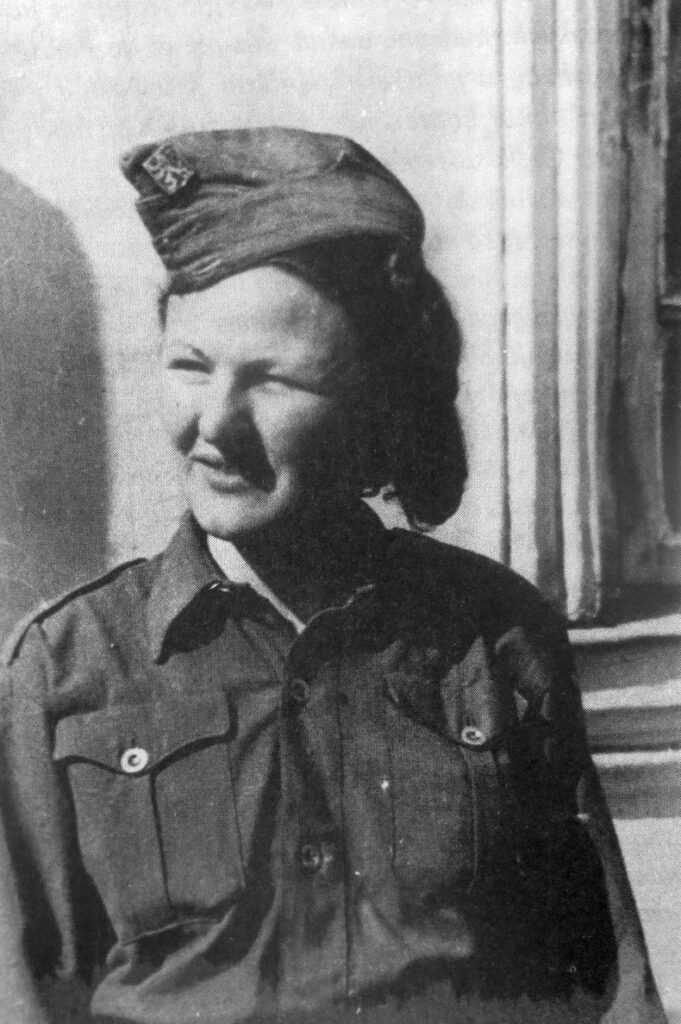
Most female soldiers carried out medical, communications, administrative, transport or technical duties. They served as doctors, medical assistants and nurses, radio operators, telephone operators, cryptographers, drivers and translators. Some were also deployed in direct combat on the Eastern Front. The term ‘auxiliary service’ must therefore not give the impression of marginal or safe work. Without medical care, communications, transport and administration, military units could not have fought. Moreover, the significance of women’s service cannot be measured solely by how many men they freed up for combat units. They themselves took on specialist roles and responsibility for the army’s operations. 6
One of the female volunteers was Jiřina Kopoldová-Švermová. After joining a Czechoslovak unit in the Soviet Union, she was initially assigned as a clerk; however, she subsequently underwent specialist training and transferred to the signals corps. As a radio operator, she ensured communication between the brigade headquarters and subordinate units – in other words, the flow of information essential for the management of military operations. Later, she also served as deputy signals officer, platoon commander and instructor for new radio operators. Her service demonstrates that women gradually acquired specialist skills and command responsibilities, even though the military environment initially confined them primarily to support roles.
The extent and nature of involvement in the war did not, in themselves, determine which stories would be publicly commemorated after 1945. Collective memory is not merely a sum of historical knowledge. It is influenced by political circumstances, contemporary notions of heroism, and the need to interpret the past in a way that corresponds to the values of the present. Some life stories therefore take on a prominent place in the public sphere, whilst others are oversimplified and still others remain on its fringes for a long time.
In the early post-war years, public commemorations emphasised the shared national struggle against the occupiers, the heroism of the fighters and the suffering of the victims. The image of a united resistance helped to restore a sense of solidarity, but at the same time obscured the diversity of wartime experiences and attitudes amongst the population. Moreover, as early as 1945–1948, various political factions vied for credit for the liberation and promoted their own interpretation of the resistance.
After February 1948, the official narrative of the past narrowed further. At its centre were the Communist resistance, the partisan movement and the Eastern foreign resistance linked to the Soviet Union. The democratic, civic and Western resistance movements were marginalised or ignored, and some of their participants themselves became victims of Communist repression. Commemorating the war thus also served to legitimise the new regime, which determined which traditions and figures were to be held up as examples to be followed.
At the same time, the image of the resistance was long shaped predominantly from a male perspective. In the foreground were soldiers, commanders, paratroopers and partisans – figures corresponding to the traditional notion of a hero with a weapon in hand. In this narrative, women often appeared merely as helpers, wives, widows or relatives of prominent men. Their work in the communications service, in households, in hospitals, in underground networks or in protecting the persecuted was usually described as supportive, even though the resistance structures could not have functioned without it. The focus was primarily on women’s sacrifice, rather than on their own decision-making, initiative and political action. Yet not all women were excluded from the post-war narrative in the same way. Female soldiers serving on the Eastern Front could become part of the official narrative of Czechoslovakia’s liberation by the Red Army, though their experiences were generally recounted in an ideologically defined manner. Emphasis was placed, for example, on their bravery in battle, their self-sacrifice and their friendship with the Soviet Union, all of which were intended to confirm the decisive role of the Red Army and the communist resistance in the liberation. Female soldiers were thus remembered primarily as representatives of a desired collective narrative, rather than as independent actors with their own, often complex, life stories. Women serving in the British Auxiliary Corps or associated with the Western resistance, by contrast, remained much more on the sidelines. The visibility of individual stories was thus determined not only by gender, but also by how well they fitted into the prevailing political interpretation of the war. 7
Marie Kudeříková represented a particular manifestation of this selective visibility. The Communist regime turned her into one of the best-known female figures of the domestic resistance. Schools and streets were named after her, and her story found its way into literature, film and public commemorative ceremonies. However, visibility did not equate to complete understanding. Kudeříková was portrayed primarily as a young communist martyr, whilst the complexity of her actions and personal motivations took a back seat to an image that could be exploited for ideological purposes. She is an example of how even a figure who is intensively commemorated can be partially silenced if her experience is supplanted by legend.
Jiřina Kopoldová-Švermová presented a different contradiction. Whilst her father, Jan Šverma, was celebrated as a Communist hero, she herself became a victim of Communist persecution in the early 1950s. Her own wartime experience as a radio operator therefore remained overshadowed by her father’s cult of personality and by the events that befell her and her family after the war. At the same time, her fate shows that even service on the Eastern Front – which would otherwise fit neatly into the official narrative of the war – did not guarantee a lasting place in the public memory if the subsequent life of a particular woman came into conflict with the regime’s needs.
A different mechanism is illustrated by the Romani song ‘Aušvicate hi kher báro’, associated with the testimony of Růžena Danielová. The song was not entirely forgotten after the war: a radio recording of the song was made in 1957, and it later became the subject of academic research and artistic interpretation. Nevertheless, it remained outside the mainstream of public remembrance of the war. Neither the experience of the genocide of the Roma and Sinti nor the song depicting the suffering in the camps fitted in with the prevailing narrative of military and political heroism.
The story of Marianne Golz-Goldlust also remained neglected for a long time. Her aid to the persecuted took place in a civilian setting and transcended national and linguistic boundaries. A German-speaking native of Vienna living in Prague, who helped Jews through informal personal connections, she did not fit into either the post-war narrative of the Czech national resistance or the later Communist canon.
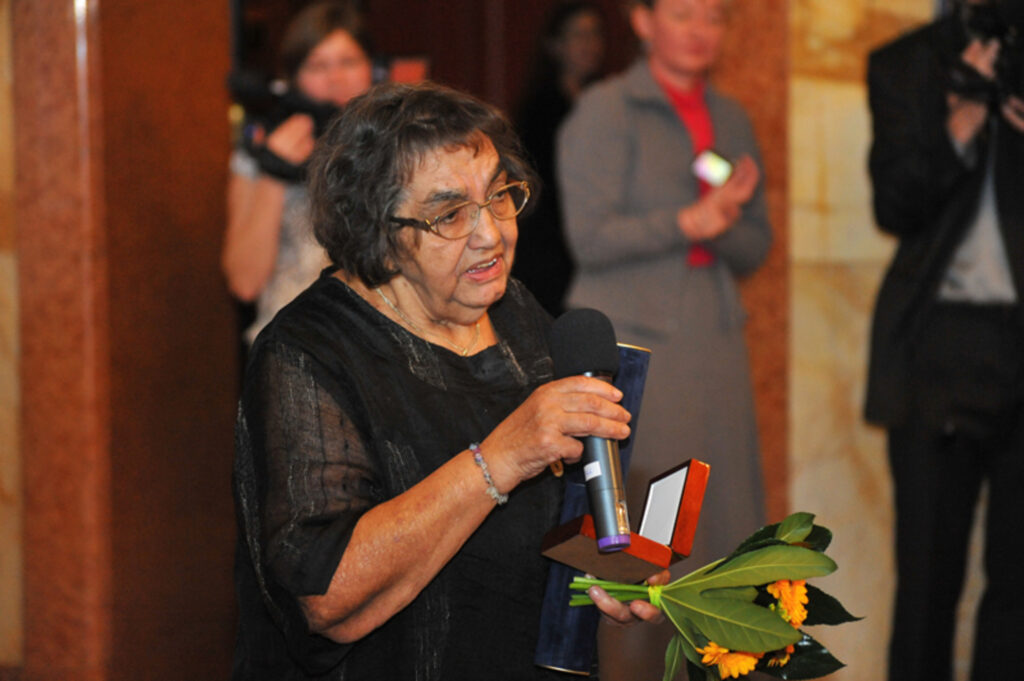
After 1989, the public perspective on the anti-Nazi resistance gradually broadened. Figures from the democratic and Western resistance were once again being commemorated, archive collections were being made accessible, and greater attention was being paid to the genocide of Jews, Roma and Sinti, the everyday reality of the occupation, and the experiences of previously overlooked groups. Gender-focused research, oral history, the publication of diaries and testimonies, and educational and artistic projects began to portray women more prominently as independent actors. Survivors and eyewitnesses also contributed to this transformation, including Emílie Machálková, who publicly shared her family’s experiences and drew attention to the Nazi persecution of the Roma.
Yet even contemporary memory is not free from selectivity. With the rejection of the Communist interpretation of the past, women whose stories were ideologically exploited by the former regime have sometimes been pushed into the background. Marie Kudeříková, for instance, may now be perceived primarily as a symbol of former propaganda, rather than as a specific participant in the anti-Nazi resistance. One simplification may thus have been replaced by another. Critical reflection therefore requires a return to the primary sources and a rigorous distinction between the wartime actions of specific women and the images of their fates created by later regimes and generations.
So what exactly can we classify as defiance, opposition or resistance? The stories of the women presented here show that the answer depends on the specific circumstances, possibilities and objectives of their actions. These terms help to distinguish between personal refusal, broader assistance to the persecuted, and organised activity against the occupying power. However, they cannot be used to create a scale of courage or moral values. Individual acts had varying scope and outcomes, and we must assess them all within the contexts in which they took place.
Marie Kudeříková, Marianne Golz-Goldlust, Jiřina Kopoldová-Švermová, Emílie Machálková and Růžena Danielová do not represent the only model of female heroism. Alongside these more or less well-known names, there remain many women about whose actions only fragmentary reports have survived, or whose names we do not know at all. Their exact number cannot be reliably determined, as informal assistance, personal defiance and activities taking place in private often left no written record.
The experiences of these women broaden our understanding of the environments in which opposition could emerge – from the home and underground networks, through military units, to concentration camps. The purpose of commemorating them is not to replace the old pantheon of male heroes with a new one of heroines. What is essential is to restore to women the space for their own decision-making, motivations and experiences on an equal footing with men. Only then can their voices help to create a more complete picture of the war, Nazi persecution and the ways in which people could stand up to it.